
There is no safe waiting period for a roof leak. What decides the damage is where the water goes, what it soaks into and how often it returns, and Greenbank's older terraces make that worth knowing.
People often hope a small drip in a Greenbank house can sit until the weather improves. Sometimes the harm is slow, sometimes it is quick, and you cannot tell from the stain alone. The honest answer depends on the roof, the timbers underneath and how much rain follows. Here is how we think about it.
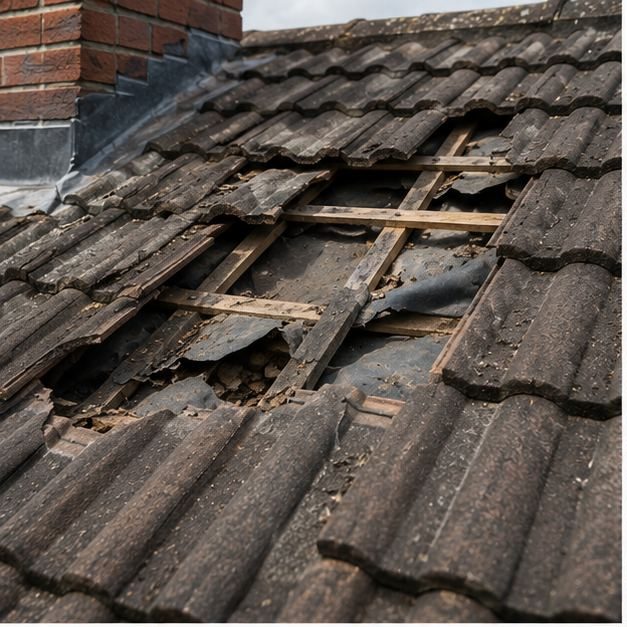
Why a small drip is rarely small
The mark on your ceiling is only where the water finally gave up. Before that it ran along rafters, battens and felt, soaking into each as it went. In a Victorian or Edwardian terrace those timbers have already done a long job, so they take on damp readily. That means the visible patch can be a few feet from the real opening in the roof, and the wet area above it is usually bigger than the stain suggests.
What makes damage start sooner
Repeated wetting does more harm than one soaking. A leak that dries out between showers is kinder than one that stays damp for weeks, because constant moisture is what lets timber soften and rot take hold. Insulation laid in the loft acts like a sponge and holds water against the wood. Bay-fronted houses have extra junctions where roof meets wall and bay, and these are common places for water to find a way in unnoticed.
- Timber that stays damp softens and can start to rot.
- Wet insulation holds moisture against rafters and ceiling joists.
- Plaster ceilings can stain, sag and eventually come down.
- Wiring and light fittings near a leak become a hazard.
Signs you should not wait
Some signs mean the leak is no longer a minor job. A ceiling that bulges or feels soft, water dripping from a light fitting, a damp smell in the top bedroom or a patch that grows after each rainfall all point to water that is spreading. Treat any of these as urgent. If the ceiling is bulging, keep clear of that spot and put a bucket or bowl underneath. Do not poke it or go onto the roof to look.
What you can safely do while you wait
From inside and the ground you can help us and limit harm. Move furniture and valuables away, protect the floor, and take dated photos of the stain so we can see whether it is growing. If it is safe to reach the loft hatch, a torch will show daylight, dark wet timber or stained felt. Please do not climb up to look or try to patch anything yourself. Tiles, slates and lead are easy to damage and a fall is a far bigger problem than a leak.
What we do when we are called
We trace the leak back to its real source rather than treating the stain. That means a look at the covering from outside, then the loft underneath, checking tiles or slates, ridge and hip, flashings and gutters. We tell you plainly whether a repair will hold or whether the area has reached the point where replacing it makes better sense. Once the opening is sealed properly, damp timbers and insulation can be dealt with and the ceiling made good.
Frequently Asked Questions
Will the leak stop by itself when the rain stops?
The drip may stop, but the cause stays. Water will return in the next heavy shower, and each soaking adds to the timber damage you cannot see. A dry spell is a good time to have it looked at, not a reason to wait.
Can I just paint over a ceiling stain?
Painting hides the mark but leaves wet plaster and timber behind it. The stain usually comes back through the paint. It is better to find and fix the source first, let the area dry, and decorate once you know it is sound.
Is a leak after storms more serious?
Not necessarily, but storms can lift or shift tiles and slates and open flashings at the same time. After rough weather we look at the whole roof, not just the room where the drip showed, because there are often a few weak points.
Talk to our team about roof repairs in Greenbank
Every roof is different — the fastest way to get an accurate answer is a quick chat with our team.