Dry Verge Roof Edges for Greenbank Gables — Brunel Roofing Bristol

Dry Verge Roof Edges for Greenbank Gables

We fit dry verge systems in Greenbank, replacing cracked mortar at gable edges with mechanically fixed units that hold the tile ends down and keep weather, birds and insects out.

✓ Fully Insured
✓ 15-Year Guarantee
✓ 24-Hour Emergency Call-Out
✓ Free Quotes & Advice
★ Fully Insured & 15-Year Guarantee
★ 24-Hour Emergency Call-Out
★ Local Bristol Roofers
★ Free Quotes & Advice
Roofing Services · Greenbank

Dry Verge Systems for Greenbank Properties

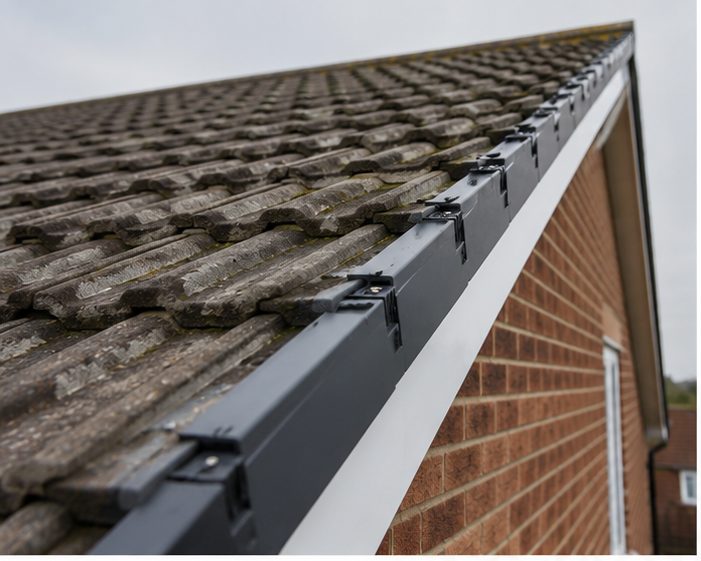
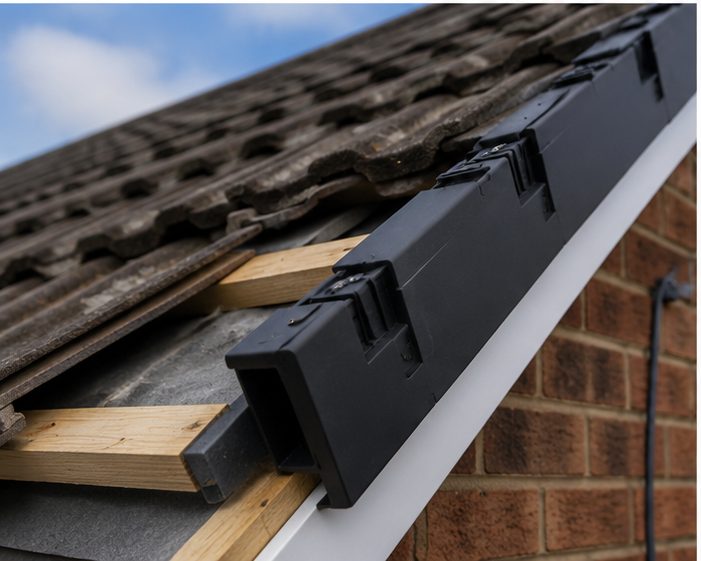
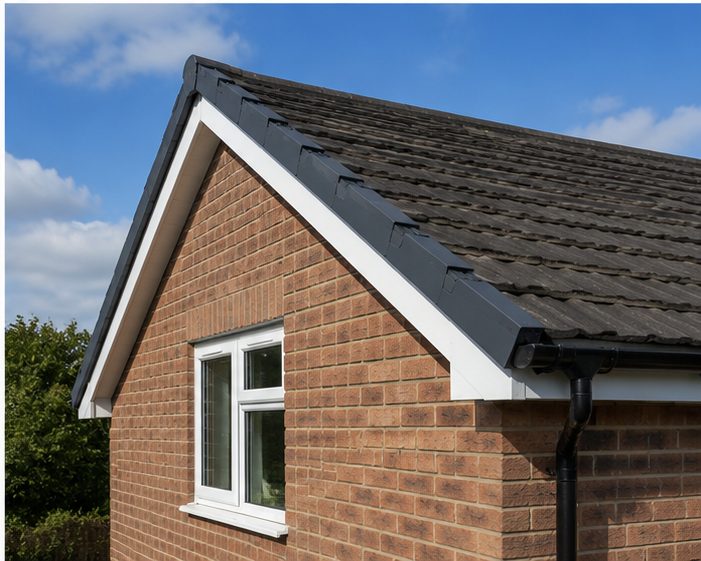
The verge is the edge of the roof where it finishes at a gable. Older houses have it bedded in wet mortar, which cracks, shrinks and falls out in time. A dry verge uses mechanically fixed verge units and tile-end or cap pieces, so there is no mortar left to fail.

On a street of terraces, gables are less common than hips and party walls, so the ones that do exist are exposed. Mortar crumbs on a path are often the first clue, followed by gaps at the tile ends. A dry system closes that edge and holds it down.

Dry Verge Systems in Greenbank by Brunel Roofing BristolDry Verge Systems in Greenbank by Brunel Roofing BristolDry Verge Systems in Greenbank by Brunel Roofing BristolDry Verge Systems in Greenbank by Brunel Roofing Bristol

Talk to our team about dry verge systems in Greenbank.

Gable Edges on Greenbank Houses

The end-of-terrace houses in Greenbank are where a terraced street meets open air, and their gable edges take the wind that the middle of the row never feels. Mortar there cracks first, and loose tile ends follow. That is a very typical case for a dry verge. The fix is fast, and the roof edge ends up far more secure than before.

Back extensions and outriggers on the terraces sometimes have small pitched roofs with their own verges. Being tucked behind the main house, they are rarely looked at, so failed mortar goes unnoticed until water has found its way into the timbers behind the tiles. A quick look at those small roofs is well worth it.

The inter-war houses near the Greenbank area have gables too, usually with mortar that is now very tired. A dry system suits them well provided the tile profile is compatible, which we check on site. It will not help a roof that is failing elsewhere, and we say so. Honest advice is part of the job.

Dry Verge Work in Greenbank

  • End-of-terrace verges. Replacing failed mortar on the exposed gable edge of an end-of-terrace house with dry verge units fixed securely to the roof.
  • Inter-war gable edges. Fitting dry verge systems on the gables of inter-war houses, where decades of weather have broken down the old mortar.
  • Extension and outrigger verges. Treating the small pitched roofs on back additions, which are easy to miss and often have the worst-looking mortar.
  • Dry verge on re-roofs. Building a dry verge into a new roof covering, so the edge is mechanically fixed from the day the roof is finished.
  • Storm repair to verges. Refixing displaced verge sections and tile ends loosened by high winds, then checking that the roof edge is secure.
  • Compatibility checks. Looking at your tile profile on site to confirm that a dry verge will fit before agreeing the job.

How We Fit a Dry Verge in Greenbank

We look at the gable edge from the ground and from safe access, noting where the mortar has failed and whether the tile ends are loose. We then explain what a dry verge will fix, and what it will not, before you decide. Only then do you commit.

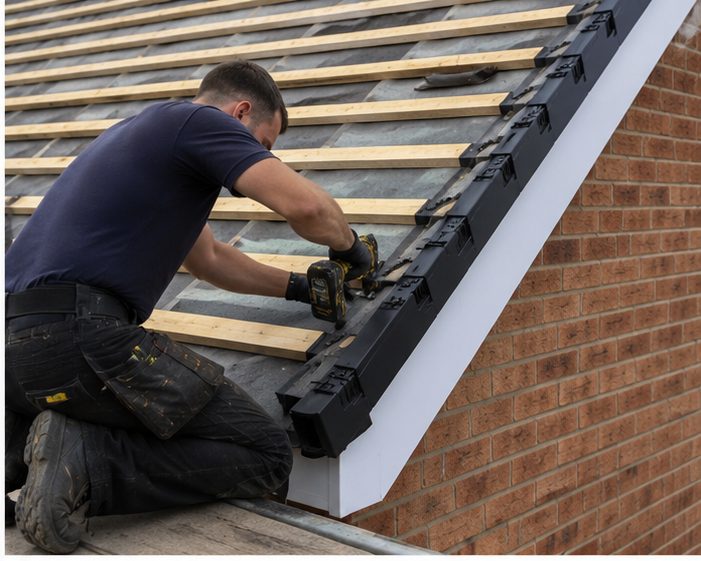
The old mortar is cleared away, the edge prepared, and the dry verge units fixed following the tile maker's guidance. We clear mortar from paths and yards afterwards and leave the roof edge neat, tight and free of wet bedding. Anything nearby that needs attention, such as a loose tile end, is pointed out and refixed if you wish.


FAQs

Dry Verge Systems in Greenbank — Frequently Asked Questions

What is a dry verge?

It is a method of finishing the roof edge at a gable with mechanically fixed verge units and tile-end or cap pieces instead of wet mortar. Without mortar there is nothing to crack or fall out.

Why choose a dry verge over repointing the mortar?

Repointing leaves you with mortar that will crack again. A dry verge resists wind at the edge, has no mortar to fail and keeps weather, birds and insects out of the roof edge.

Does my tile type matter?

Yes. Compatibility depends on the tile profile, so we confirm it on site before the job begins. Most common tiles suit a dry system, but we check each roof instead of assuming. That keeps surprises away.

What are the first signs of a failing verge?

Mortar falling onto paths or drives, cracks along the gable edge, loose-looking tile ends and gaps where birds are getting in. Please watch from the ground only and call us if you spot any.

Will a dry verge stop my roof leaking?

Only if the verge is the cause. It is not a cure for a roof failing elsewhere. We check the wider roof and tell you if ridges, flashings or tiles need attention as well.

Free Resource

Dry Verge Systems Advice for Greenbank

Practical guides for homeowners in Greenbank and across Bristol.

Browse the Full Advice Centre →
More in Greenbank

Other Roofing Services in Greenbank

🚨 24-Hour Emergency Call-Out

Emergency Roofing Repairs, Any Time of Day or Night

Storm damage, sudden leaks or a roof that's come apart in bad weather? Our emergency roofing team is on call 24 hours a day across Bristol — and every job we carry out, emergency or planned, is backed by our 15-year guarantee.

Get In Touch

Request Your Free Quote

Tell us what's happening with your roof and we'll get back to you — usually the same day.

Prefer to talk? Call 07864 593 568, 01179 110 458 or freephone 0800 4748 321.

📞