
A dry verge replaces the wet mortar along a gable edge with mechanically fixed units. Here is what that means on the tiled roofs found across Kingswood.
The verge is the edge of the roof where it ends at a gable wall. For generations it was finished with mortar, which cracks and falls out. Many of Kingswood's inter-war and post-war roofs have gable ends, particularly on garages and extensions, so verges are common here. A dry verge takes mortar out of the picture entirely and relies on fixings instead.
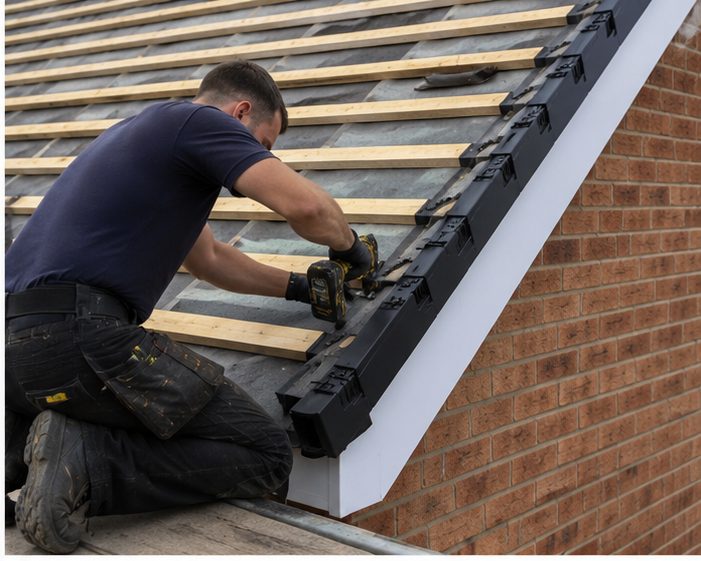
What a dry verge is made of
The system uses verge units that sit over the edge of the tiles, with tile-end and cap pieces to close the ends. The units are fixed mechanically through to the battens, to the tile maker's guidance. There is no wet mortar involved, so nothing sets, shrinks or cracks away. Cap pieces finish the ends neatly and securely.
How it works at the edge
The gable edge takes the full force of wind lifting the tiles. Fixed units hold the edge down firmly and shed rain away from the wall. They also keep weather, birds and insects out of the gap beneath the tiles, which open mortar joints often allow in. On a windy day, a firmly fixed edge is one less thing to worry about.
- Units fixed mechanically, with no wet mortar
- Better resistance to wind at the roof edge
- Rain shed away from the gable wall
- Birds and insects kept out of the roof edge
Where it is used
Dry verges suit new roofs, re-roofs and repairs where mortar has failed. On a garage or a gabled extension, they can make a neat, low-maintenance finish. They are not a fix for a roof that is failing elsewhere, so the tiles and felt behind the verge need to be sound. Hipped roofs without gables have no verge at all, so this applies only where a gable wall is present.
Does it suit every tile?
Compatibility depends on the tile profile, and we check this on site. Most common tiles are covered, but unusual or very old tiles may need a different approach. If a dry verge is not right for your roof, we tell you plainly and talk through the alternatives. We also look at whether the overhang at the gable suits the unit being fitted, since that affects how neatly it sits.
What you can expect
The existing verge mortar and edge tiles are lifted, the batten and felt at the edge checked, the units fitted and tiles refixed. You should be told which system is used, how it is fixed and what happens at the top and bottom of the run. A written description keeps it clear. Any cracked edge tiles are replaced at the same time.
Frequently Asked Questions
Is a dry verge the same as a dry ridge?
No, they are different parts of the roof. A dry verge is the gable edge, and a dry ridge is along the top. Both use fixed units in place of wet mortar, and we can discuss either. Both are a good way of removing mortar from the roof.
Will a dry verge need maintenance?
It is much lower maintenance than mortar because nothing cracks or drops out. The roof edge should still be looked at from time to time, as with any part of the roof. We recommend a quick look after storms or very wet spells.
What is the first sign my verge is failing?
Pieces of mortar on a path, drive or bin lid are typical. You may also see cracks along the gable edge from the ground. Please do not climb up, and call us for a proper look. This can be the first of several signs.
Talk to our team about dry verge systems in Kingswood
Every roof is different — the fastest way to get an accurate answer is a quick chat with our team.