
Choosing a dry verge is easy once the roof edge is understood. These are the checks to make first, whether it is a main house gable or a garage roof.
Gable ends are everywhere in Kingswood, on houses, garages and extensions, and many have verges that have lost their mortar. A dry verge is a solid answer, but only when a few things line up. These checks decide whether it is right for your roof, and they are worth running through before you agree to any work.
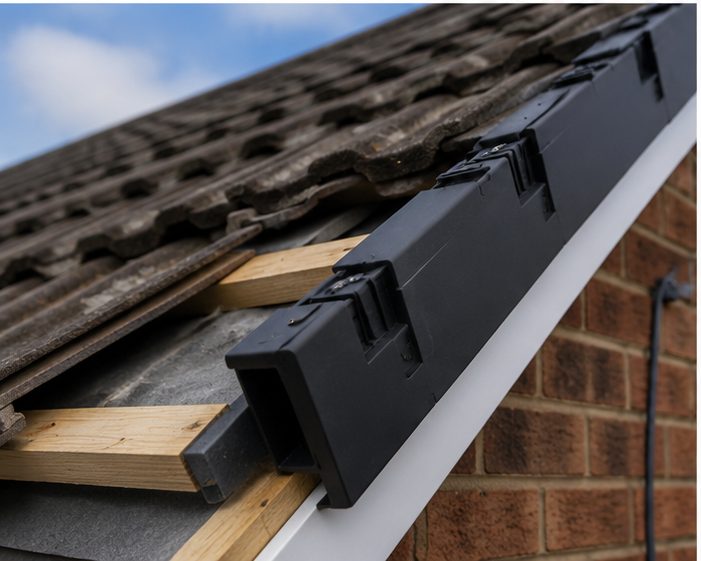
Match the tile profile
Dry verge units are made for particular tile shapes, so identify what you have. Plain tiles, interlocking tiles and concrete profiles each behave differently at the edge. We confirm compatibility on site by looking at the tiles and the overhang, so the units sit properly and shed water as intended. Photographs of the existing edge help us check the details. The overhang at the gable also affects which unit sits neatly, so we measure it before we advise.
Check the roof behind the edge
Fresh units over a tired roof only hide the problem. We check that the felt and battens at the edge are sound, the tiles are not crumbling and the barge board and gable wall are in good order. If they are not, those faults are put right first, or the roof is considered as a whole. Any necessary repairs to the bargeboard or edge tiles are quoted for separately in writing.
- Edge tiles intact rather than flaking
- Felt and battens firm at the verge
- Barge boards sound and not rotten
- Gable wall pointing in reasonable order
Think about garages and extensions
Garage and extension roofs often have different tiles, lower pitches and shallow overhangs from the house. A dry verge may still suit them, but the details change. We look at each gable separately rather than assuming the same system works across every roof on the property. Lower pitches and shallow overhangs need particular care for water to run away properly.
Look at what the failure is telling you
Falling mortar is a typical first sign, but sometimes it hides movement or water getting in. We check the bedding, the cloak pieces and the area below the verge for staining. If mortar is simply old and tired, a dry verge is a straightforward replacement. Fixing and tile ends are reviewed together.
Ask the right questions
Ask which units will be used, how they are fixed and to what guidance, how existing tiles will be handled and what happens at the ends of the run. Ask also what the alternative would be. A roofer who describes this clearly and puts it in writing is worth considering. Written details also make later comparison between roofers easier.
Frequently Asked Questions
Can a dry verge be fitted to a garage roof?
Often yes, subject to the tile type and the condition of the edge. We assess each gable on its own merits and explain what is possible on site. Some garages have a simple gable that suits one well. We look at each case separately.
What if my tiles are very old?
Older or unusual tiles may not suit standard units. In that case a carefully made mortar repair may be the honest answer, and we will tell you so rather than force a system that does not fit. Not every tile is suited, which is why the checks come first.
Will a dry verge fix a leak at the gable?
If the leak is caused by failed mortar, it can help. If water is coming in through damaged tiles, felt or flashing nearby, the verge alone will not solve it, and we check for those too. We check for other faults nearby at the same visit.
Talk to our team about dry verge systems in Kingswood
Every roof is different — the fastest way to get an accurate answer is a quick chat with our team.