
Ridge tiles and lead flashings are the joints of a roof, and they fail before the field of tiles does. Here is what repairing each one actually involves.
Across the inter-war and post-war estates of Kingswood, hipped tiled roofs are everywhere, and hipped roofs carry a lot of ridge and hip tiles. Where the roof meets a chimney or a wall there is lead. These are the details that move, crack and let go first. Here is what we do when they need attention, step by step.
Why ridges and hips fail
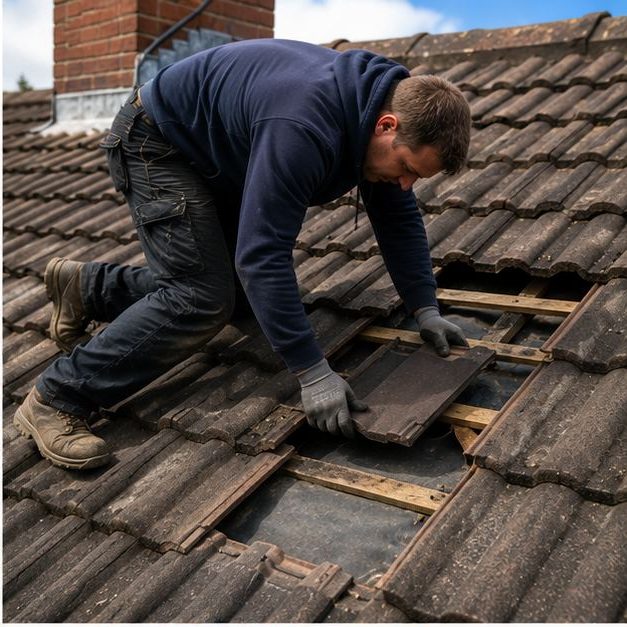
Ridge and hip tiles are bedded in mortar along the top of the roof and down each corner. Weather, small movements and age make the bedding crack and shrink. Tiles then rock, drop out of line or slide. A hipped roof has several of these runs, so there is more chance something has gone. Water that gets in at the top of the roof often shows up at a surprising place lower down.
What ridge re-bedding involves
We lift the loose ridge tiles, clear out the crumbled old mortar, and rebed them on fresh mix, checking each tile sits level and secure. Where hips end, the end tiles and any hip irons are checked too. Fixings and ventilation pieces are added where they suit the roof. The aim is a ridge that stays put in wind. Where tiles are cracked or worn, we replace them with matching ones rather than rebedding damaged pieces.
- Loose tiles lifted and old bedding cleared out
- Fresh mortar and secure fixing of each tile
- Hip ends and any metal supports checked
- Ridge line left straight, tidy and weather tight
What lead flashing does
Lead flashing seals the joint where a roof meets something solid, such as a chimney, a party wall or a dormer cheek. It is shaped to the joint and tucked into the masonry. Over time it can lift, split, crack at folds or pull out of its chase, and water then gets in and travels to somewhere you might not expect. Chimney flashings are among the most common places for this to happen on terraces and semis.
How lead flashings are repaired
Small splits and lifted edges can sometimes be dealt with by repairing and refixing, with new lead and proper wedges and pointing. Where the lead is thin, torn or widely worn, we replace the run. We work out the source of the leak first, so we repair what is actually letting water in, not what looks worst. New lead is dressed carefully so it sits flat against the roof and wall.
What to expect and what to ask
Expect an explanation of what was found, which sections will be renewed, and how access will be arranged. Ask about the materials used for the bedding and the lead, and whether anything else nearby needs attention while we are there. A clear written description helps you compare any quotes fairly.
Frequently Asked Questions
How can I tell my ridge tiles need attention?
From the ground you may see tiles out of line, gaps along the ridge, or mortar fragments on the path. Please do not climb up to check, and call us for a proper look. A line of dark mortar dust on a path under the ridge is another clue.
Is lead flashing a common cause of leaks?
Yes, quite often. Water enters at chimneys, valleys and wall junctions where lead has lifted or split, then runs along timbers before it shows. We trace the leak before deciding on the repair. Gutters that overflow onto the same spot repeatedly can point to a related problem.
Can ridge repairs be done without scaffolding?
It depends on the roof and where the work is. We explain how access will be arranged, and where scaffold is the safer or more sensible option, we say so before work starts.
Talk to our team about roof repairs in Kingswood
Every roof is different — the fastest way to get an accurate answer is a quick chat with our team.