Where Kingswood Roofs Have Verges
Kingswood's inter-war and post-war roofs are largely hipped, so verges turn up in specific places: gable-fronted extensions, side-on garages and the occasional gabled house among the terraces. Where they exist, they have often been exposed for a long time. Garages from the inter-war and post-war building years often have a plain pitched roof, and their verges are among the least attended edges on a house.
Because verges are on edges, they take the worst of the weather. Rain runs down into them, frost works at the mortar, and wind catches the tile ends. After enough winters, the bedding cracks and begins to drop onto paths and drives. Without anyone looking, mortar fails, the end tiles loosen and birds begin to nest in the gap.
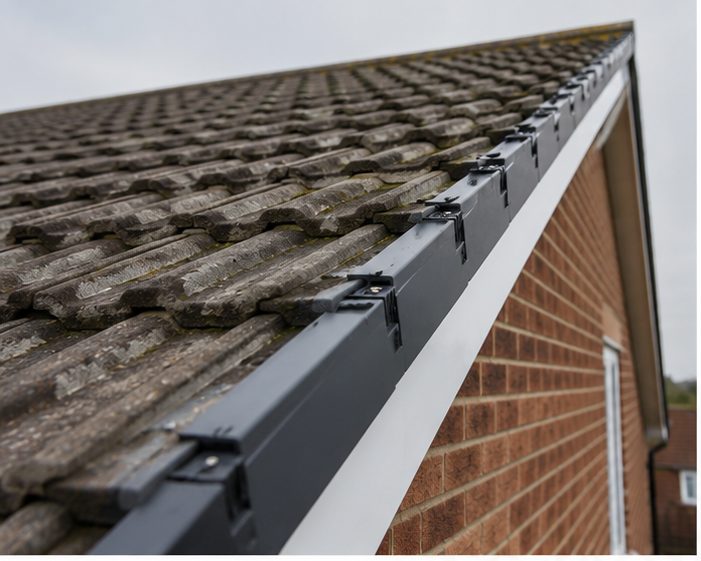
A gap along a verge is a way in for water and birds, and loose edge tiles can lift in a gust. We look at what is under the mortar before recommending a dry system, since it will not fix a roof that is failing elsewhere. Dry verge units are a tidy fix for that kind of neglect, as they cover the whole edge and stay put.
Dry Verge Work in Kingswood
- Dry verge repair. Stripping failed mortar along a verge and fitting dry units in its place, leaving the rest of the roof covering untouched.
- Dry verge on new roofs. Fitting a dry verge as part of a new roof or re-roof so the edge is mechanically fixed from day one.
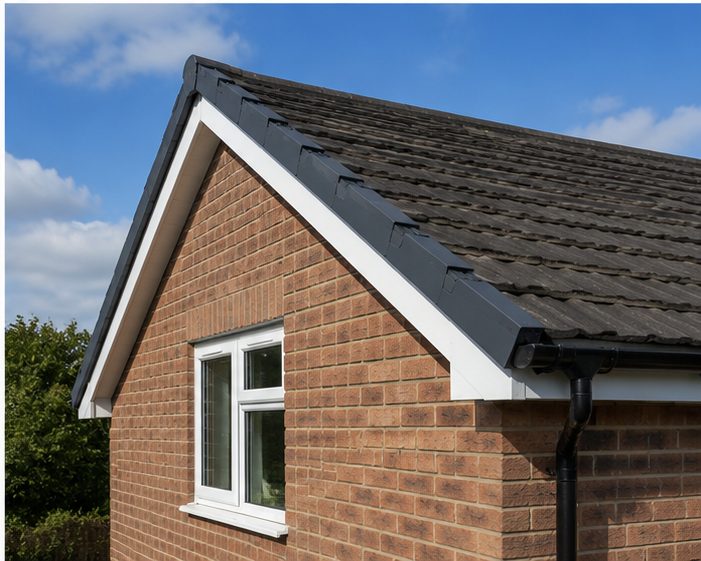
- Garage and extension verges. Treating the verges on side garages and gabled extensions, where old mortar tends to fail and drop on to the drive.
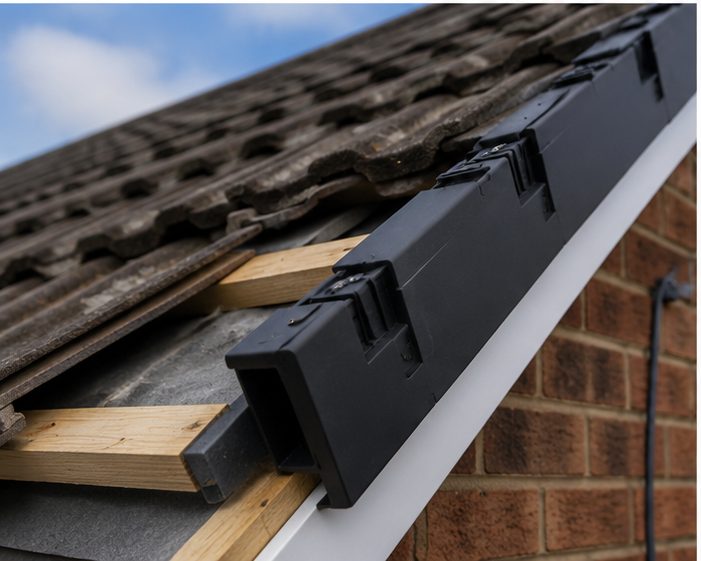
- Tile-end and cap pieces. Finishing the edge with matching tile-end and cap pieces that seal the gap and keep weather, birds and insects out.
- Edge tile re-fixing. Securing or replacing loose tiles along the verge before the dry units go on, so the new edge sits on solid ground.
- Fit and profile checks. Confirming the units suit your tile profile before work starts, since compatibility is not the same for every tile.
How a Dry Verge Is Fitted in Kingswood
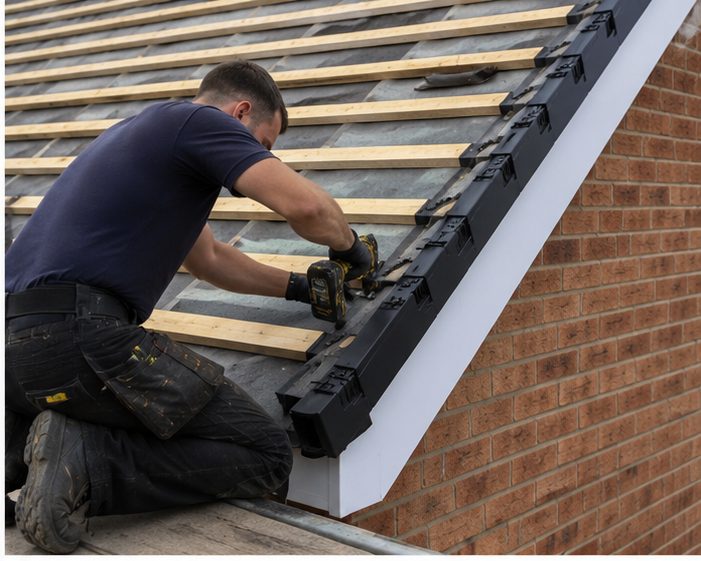
We begin at the ground, noting where mortar has fallen and how far the damage runs along the verge. Then we check the edge up close: the tiles, the felt underneath and the fixings. If the fault is mortar alone, a dry verge is a good answer. We make sure the tiles along the edge are firm before the new units go on, because a dry verge cannot hold loose tiles.
Units are fixed following the tile maker's guidance, once we have confirmed on site that they suit your profile. We keep the work tidy and clear away the old mortar. If we find another problem on the roof, we tell you straight rather than leaving it unmentioned. Old mortar and debris are cleared from drives, paths and gutters at the end of each day.