
A dry verge replaces the mortar at a roof's gable edge with fixed units. This guide explains how it works and why it suits many homes in Patchway.
The verge is the edge of the roof where it finishes at a gable wall. On the semis and newer homes of Patchway, those edges face the wind across wide, open estate roads. A dry verge closes the edge with mechanically fixed pieces instead of a bed of wet mortar, which removes the part that tends to fail.
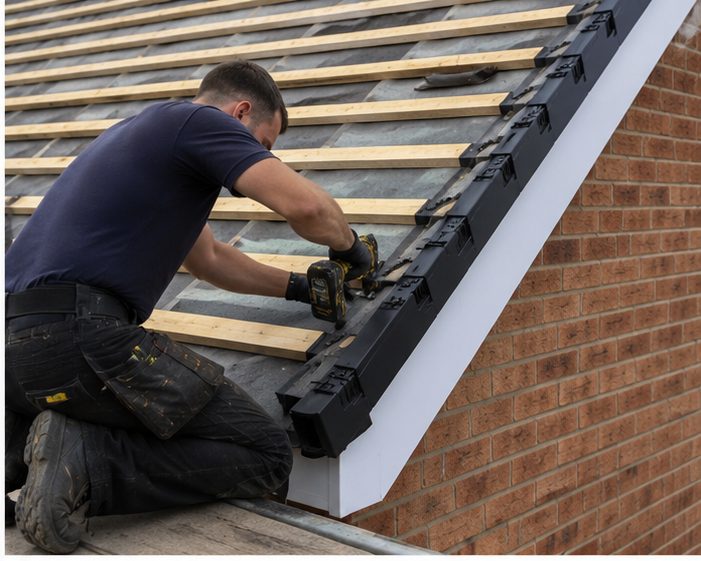
The edge of the roof, explained
On a gable end, the last row of tiles stops at the wall and the gap above the wall top must be sealed. Traditionally this was done by bedding the tile ends in mortar. That mortar sits fully exposed, and over time it cracks, loosens and falls out, leaving the edge open to weather.
On a semi, there are two gable edges, and sometimes more where an extension has its own pitched roof. Each one is a long line of exposed mortar, which is why failures are so common and so visible. Chips of mortar on the path are usually the first thing people notice.
How a dry verge is built
A dry verge uses purpose-made verge units and tile-end or cap pieces, fixed with screws or clips to the roof structure. No wet mortar is used. The pieces overlap so water runs off the edge and down the roof. The system is fixed to the tile maker's guidance, so each part is held positively against the wind and not merely stuck down.
- Verge units follow the line of the gable edge.
- Tile-end or cap pieces finish the corners and top.
- Mechanical fixings hold everything to the roof.
- No mortar is left exposed to crack and drop.
What it protects against
Because wind lifts at the edge of a roof more than in the middle, a fixed edge matters. A dry verge also keeps rain, birds and insects out of the roof space. Falling mortar on paths and drives is a typical first sign that a traditional verge is failing, and the dry system removes that problem at its source.
Fixing the edge mechanically also means the verge does not rely on the weather being kind on the day, because there is no mortar to cure. That makes the work less sensitive to conditions and the result more predictable, which suits the changeable weather we get.
Where it suits and where it does not
Dry verge suits new roofs, re-roofs and repairs where mortar has already failed. It is not a cure for a roof that is failing elsewhere, and compatibility depends on the tile profile, which we check on site. An older, mismatched roof may need adjustments before the units sit correctly.
What to expect from the work
On most estate semis access is simple. Old mortar and loose tile ends are removed, the edge is cleaned and the new units fixed along the gable. We keep the drive and path clear of debris, explain what we find beneath the old mortar, and tell you if anything else on the roof needs attention.
Frequently Asked Questions
Does a dry verge need any maintenance?
Very little. With no mortar to crack, there is less to go wrong at the edge. A glance from the ground now and then, and a check after severe weather, is enough. Call us for a proper look at anything that seems out of line.
Will it match my existing tiles?
Units are made to suit common tile profiles and come in colours that blend with typical roofs. Whether yours is suitable depends on the profile, which we confirm on site before recommending the system.
Can it be fitted to part of a roof only?
Yes, on a repair a single gable can be done where the mortar has failed. If the roof is being renewed, dry verge is usually included at every gable so the edges are consistent and protected.
Talk to our team about dry verge systems in Patchway
Every roof is different — the fastest way to get an accurate answer is a quick chat with our team.