
A dry verge is only as good as the roof it is fitted to. These are the checks worth making before you commit on a Patchway home.
Choosing a dry verge sounds simple, but a few checks decide whether it will perform. On the estate semis and newer builds around Patchway, tile types vary, and so does the condition of the gable walls. A proper look first avoids paying for units that do not fit or edges that fail again.
Do the tiles match the system
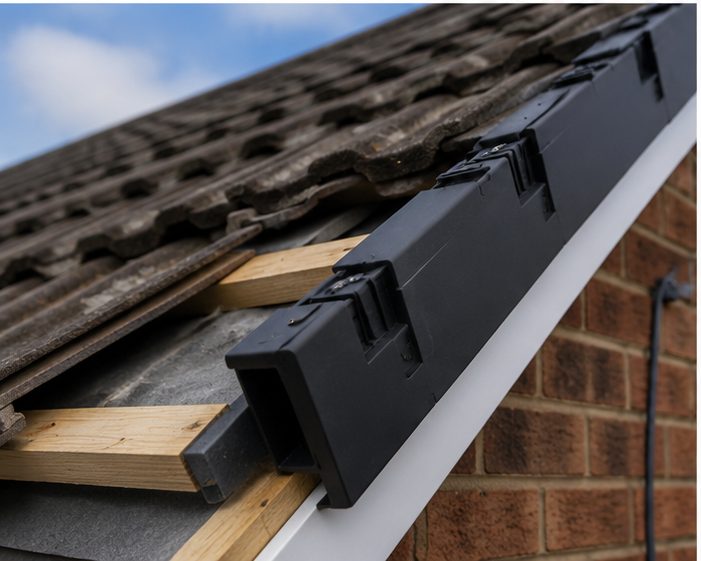
Dry verge units are made for specific tile profiles, and not every unit suits every tile. Inter-war and post-war roofs often carry replacements from different periods, so the profile can change along a slope. We confirm the tile type on site and match the system to what is there, not to what looks similar from the ground.
A mismatch is easy to miss from below. Two tiles can look the same from the road yet differ in depth or in the shape of the roll. A unit that nearly fits can leave a gap that water and wind exploit, so we check, rather than assume.
What condition is the gable wall in
The wall top, or the verge undercloak beneath the tiles, needs to be sound enough to fix to. If the brickwork is loose, damp or crumbling, it needs repair first. Fixing a clean new edge to a weak wall would simply hide the problem and let it grow behind the units.
If we find damp or loose brickwork under the old mortar, we tell you what we see and what needs doing first, so you are not surprised halfway through the job. Sometimes the wall top needs only minor attention, and sometimes it needs more.
Is the roof behind the verge sound
A dry verge protects the edge but cannot cure a roof failing elsewhere. If tiles are slipping on the main slope, the felt is torn or the battens are weak, the edge will not stay secure for long. We assess the whole roof and tell you honestly whether the verge is the right place to start.
Fixings, guidance and wind exposure
The units should be fixed according to the tile maker's guidance, with the right fixings in the right places. Wide, open estate roads can funnel wind at roof edges, so the fixing pattern matters. Ask your roofer how the verge will be held down and what is behind the visible parts.
- Is the tile profile confirmed before ordering units?
- Is the gable wall top solid enough to fix to?
- Will fixings follow the maker's guidance?
- Has the rest of the roof been looked at?
Questions to put to any roofer
Ask what is being removed, what is being installed and why this system suits your tiles. A clear answer mentions the profile, the wall and the fixings. You should also hear how the site is protected and cleared. If a re-roof is involved, it may need planning or Building Regulations checks, and we advise before work starts.
Frequently Asked Questions
Can I tell from the ground if I need a dry verge?
Often you can see the signs: mortar on paths, gaps along the gable edge, tiles leaning at the end. Please do not climb up to check. Call us for a proper look and we will confirm what is needed.
Is a dry verge worth it on an older roof?
It can be, if the rest of the covering is sound enough to justify it. On a tired roof, the better choice may be to deal with the whole slope first. We give you an honest view of what makes sense.
Does the colour need to match?
Units come in common colours that blend with typical tiles, so a good match is usually possible. We check against your existing roof and talk through the options so the edge looks consistent along the gable.
Talk to our team about dry verge systems in Patchway
Every roof is different — the fastest way to get an accurate answer is a quick chat with our team.