
Dry verge units suit many roofs, but a tall Victorian or Edwardian gable needs a few checks first. Here is what we look at and what you should ask before agreeing.
Roofs in Sneyd Park are tall, and their gable edges stand open to wind from the gorge. A dry verge is an appealing fix, but it is not automatic. The covering, the state of the roof edge and the height of the gable all affect what is sensible, so it pays to check a handful of things before choosing.
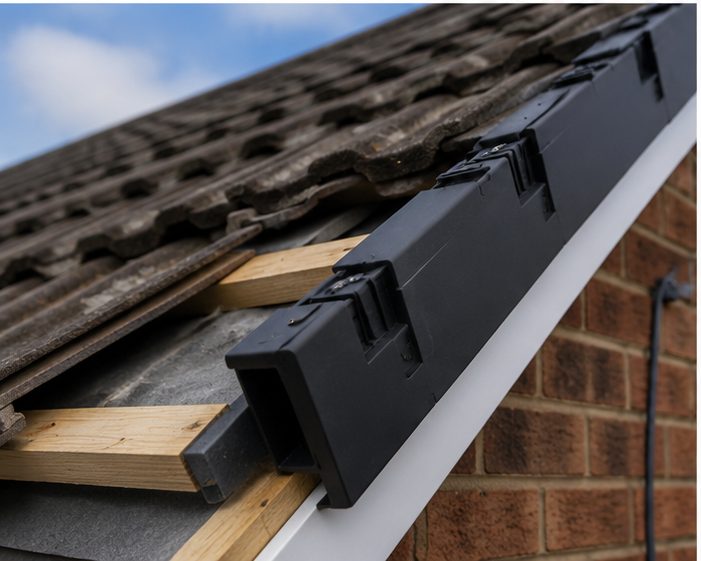
The covering you have
Verge units are made for particular tile profiles, and not every roof covering has a matching system. Slate roofs and older clay tiles can need careful handling or a different approach. We look at the covering itself on site, rather than guess from the ground or a photograph, and tell you what is available.
If a matching system does not exist for your covering, we will say so, and explain what a sound alternative looks like. A mismatched unit on an elegant villa roof would look wrong and perform badly, so the choice is made with care rather than speed.
The condition of the edge
We look at the last courses along the gable, the battens beneath them and the bargeboard or edge detail. If timber is soft or tiles are broken at the edge, those need fixing before any new units go on. A tidy new verge over a weak edge will not last, and it simply hides the cause.
- Last tiles or slates along the edge firm and sound
- Battens beneath in reasonable condition
- Bargeboard or edge board free of rot
- No sign of leaks elsewhere on the slope
Height and access
Tall gables mean safe, planned access, which affects how the job is set up. It is a good reason to do everything at the edge in one visit, including any small repairs close by. Mature trees nearby also deserve a look, since branches and debris can affect the work and the roof edge afterwards.
What the verge is not for
A dry verge deals with the roof edge. If the roof is failing across its slopes, the verge will not stop leaks, and it should not be sold as if it would. We look at the whole roof and tell you if other work should come first, or be done alongside, so money is not spent in the wrong order.
Questions to ask a roofer
Ask how the system suits your covering, how it will be fixed, and what will happen to the old mortar and loose pieces. Ask how the gable will be reached and how the garden will be protected. A new roof edge may need planning or Building Regulations checks — we advise before work starts.
Expect a written description of the work, a clear account of how access will be arranged, and a tidy site afterwards with old mortar cleared from the garden, paths and gutters, and nothing left lying about for you to deal with yourself.
Frequently Asked Questions
Can a dry verge go on a slate roof?
It depends on the slate and the system. Some roofs suit it, others need a different edge detail. We check on site, looking at the covering itself, and tell you which route is sensible for your roof and why it was chosen.
Should I fix other roof faults first?
If other faults are leaking or the edge battens are weak, yes, or at least at the same time. A verge only protects the edge, so we look at the whole roof before agreeing the order of work.
How do I know the existing verge has failed?
Mortar crumbs on paths and drives, visible cracks and gaps at the gable edge, and birds or insects getting in are the usual signs. Check from the ground and call us for a closer look.
Talk to our team about dry verge systems in Sneyd Park
Every roof is different — the fastest way to get an accurate answer is a quick chat with our team.