Verges on Redcliffe roofs
Pitched roofs in Redcliffe tend to be found on the older terraces, where gable ends and party-wall details are common. Mortar at these edges has been exposed to weather for a long time, and it is usually the first part of the roof to show its age. It is worth sorting while the fault is small, because the longer it is left the more of the edge goes.
Because many sites here are tight, falling mortar is more than an annoyance. It lands on shared passages, entrances and neighbouring ground, and loose pieces at the edge are the sort of thing worth dealing with before wind finds them. Our advice on tight sites is to deal with it early, before a gust turns a crack into a loose piece.
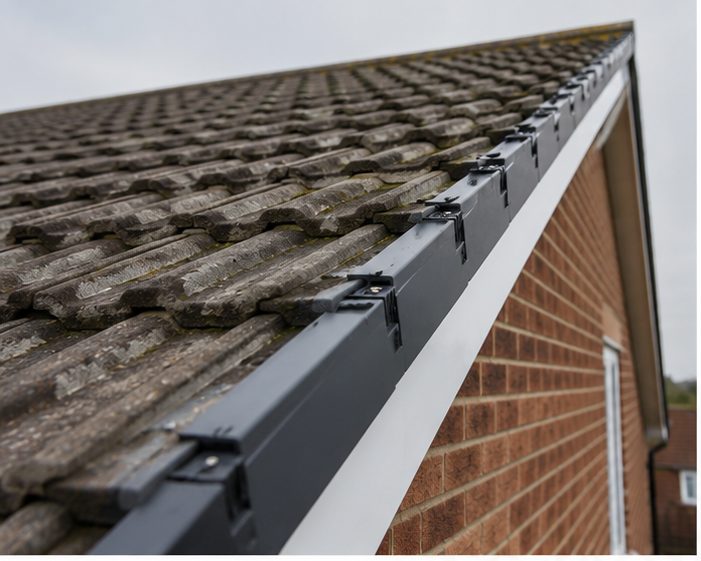
A dry verge is not a cure for a roof failing somewhere else, so we look at the wider covering as well. Whether the units fit depends on the tile profile, which we check on site, and fixing follows the tile maker's guidance for that roof. If the profile does not suit, we say so and suggest a sensible alternative.
Dry verge work we carry out in Redcliffe
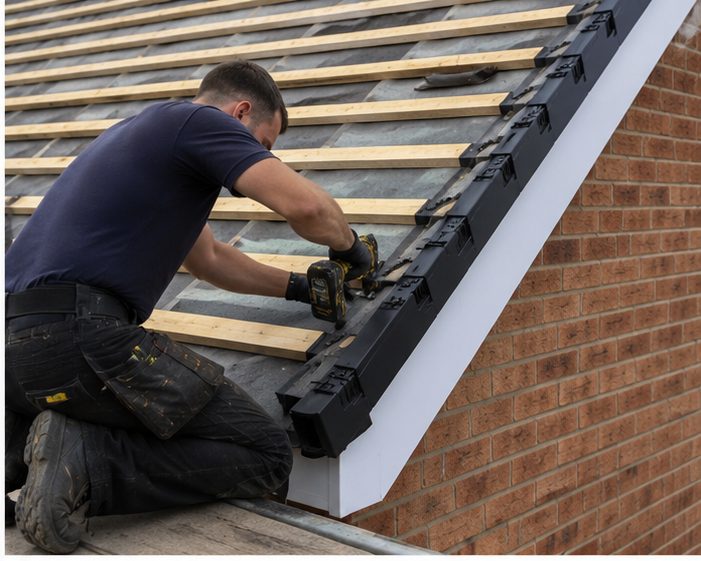
- Dry verge on re-roofs. When a roof is being recovered, dry verge units go in from the start so the gable edges are finished without wet mortar.
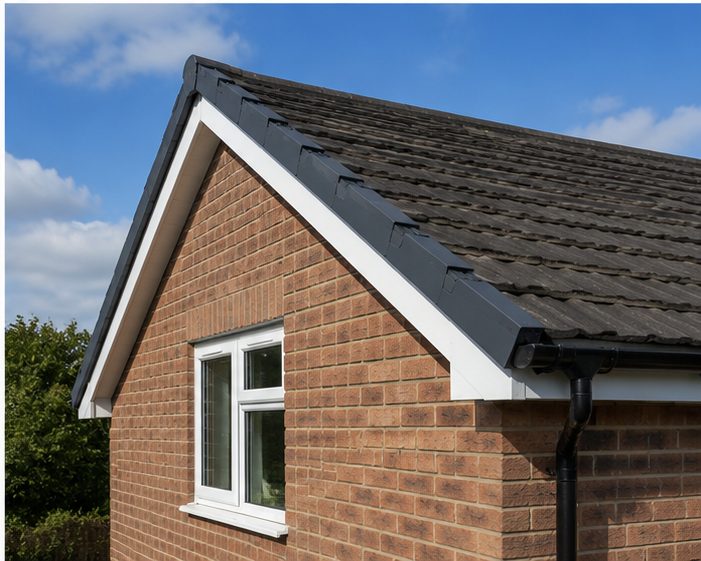
- Replacing failed mortar bedding. We remove cracked and loose verge mortar and fit mechanically fixed units in its place, leaving the edge tight and tidy.
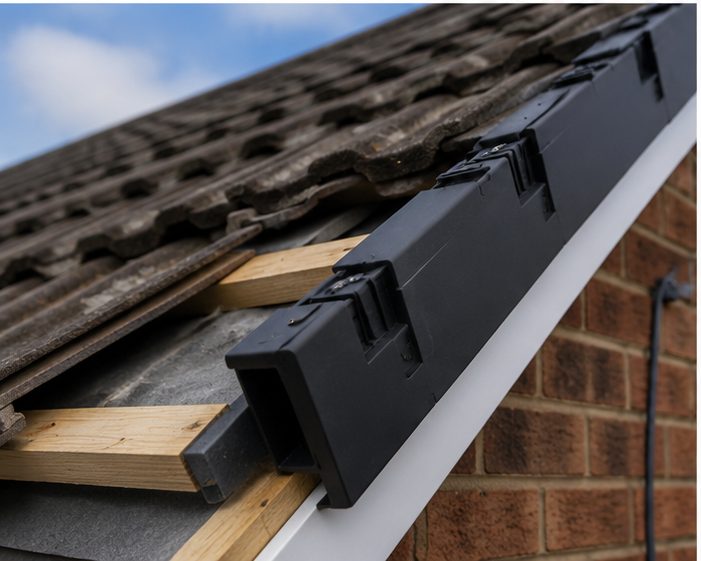
- Verge end and cap pieces. Tile-end and cap pieces are matched to the roof covering and fixed in position to close off the edge neatly.
- Fixing to the tile maker's guidance. Units are installed using the fixings and spacing recommended for the specific tile, rather than a general rule of thumb.
- Edge repairs after storm damage. Verges that have been lifted or loosened by wind are re-secured or replaced so the roof edge stops catching the weather.
- Checking tile profile compatibility. Before quoting a dry verge, we confirm on site that the tile profile will take the units properly.
How we fit dry verges here
The first visit is about the edge itself and the roof around it. We check how far the mortar has failed, whether tiles beneath have shifted, and whether your tile profile suits a dry verge system. If it does not, we say so and suggest another route. We explain what we see in plain terms and show you any photographs we take.
Work then follows the manufacturer's fixing guidance. Old bedding comes off, the tiles are checked, and units and end pieces are fixed mechanically. Access on tight Redcliffe sites is planned beforehand, and any loose debris is cleared from paths and neighbouring ground. We leave the area swept and tell you what we found.