Flat roofs on Henbury cottages and estate homes
Around the older stone houses and cottages of the village core, flat roofs usually belong to later additions: rear extensions, small kitchens and porches built against thick old walls. The junction with the stone is the part most likely to leak. Stone does not move with the roof, so the seam between them opens first, and we form a proper upstand and flashing rather than just smearing mastic into the gap.
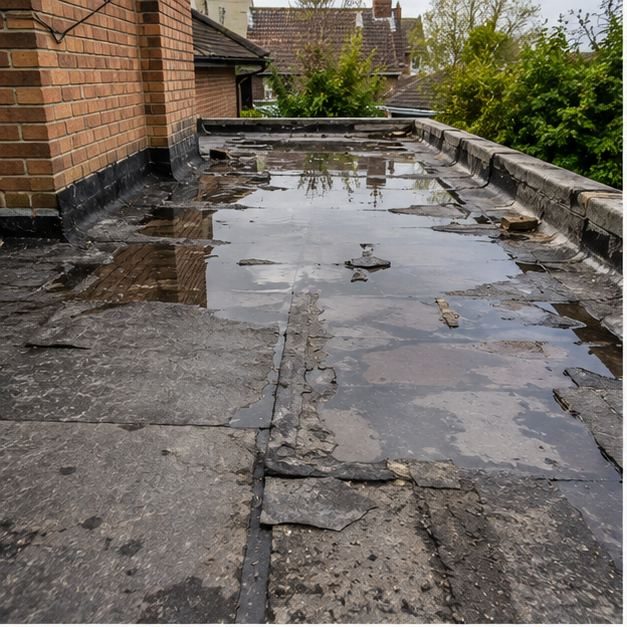
On the inter-war and post-war estates, flat roofs are more often garages, side extensions and porch canopies. Many have been recovered with felt several times, and layered patchwork can conceal a deck that has been quietly rotting underneath. A patch on a patch on a patch is a sign the deck needs checking, because soft boards below mean a new covering on top will not last.
Wherever the roof sits, the same questions apply. Are the falls good enough to clear water, are the outlets and gutters running freely, and is the covering finished at the edges so wind cannot get beneath it? Those answers decide what the right repair is. A small garage roof is quick work, but the edges and fixings still decide whether it lasts.
Flat roof work we do in Henbury
- Leak tracing and spot repairs. We find where water is entering, cut out the failed area and patch in new material where the surrounding covering is still sound.
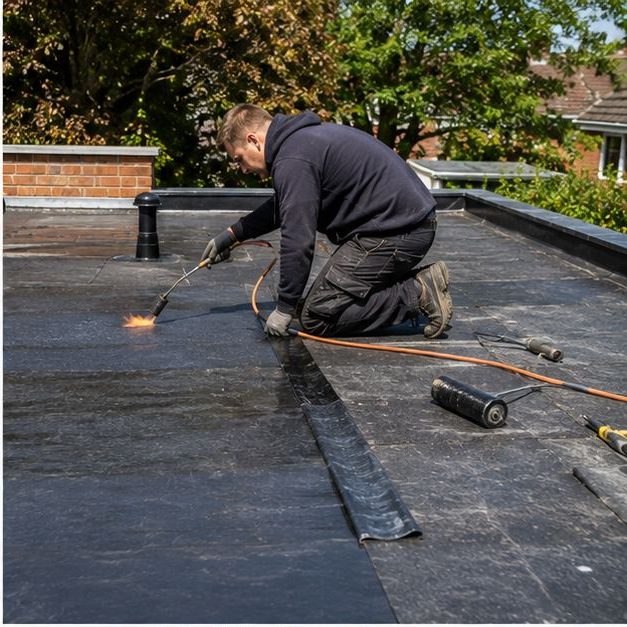
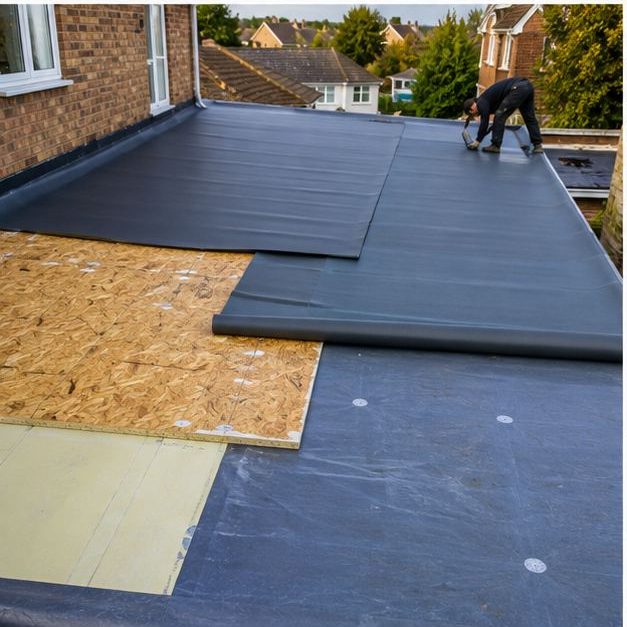
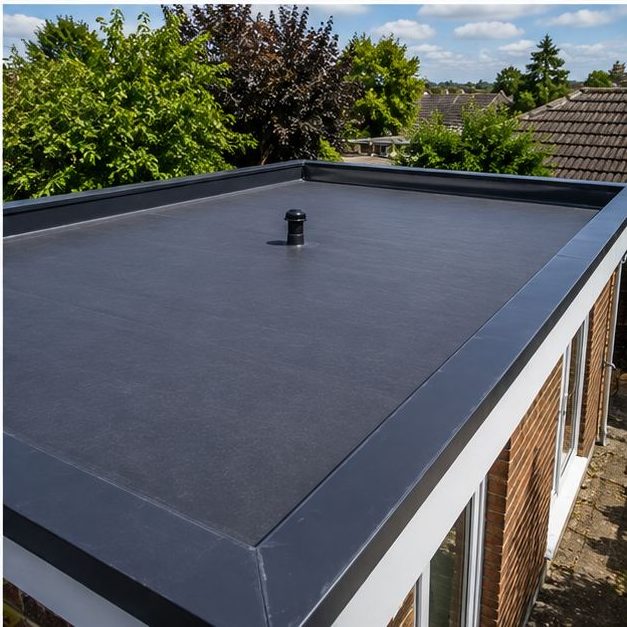
- Complete flat roof replacement. Where the covering is worn out across the roof, we strip back and lay a new single-ply, fibreglass or felt system on a sound deck.
- Extension and porch roofs. Roofs on extensions and porches get new upstands, edge trims and wall flashings so junctions stay tight against older masonry.
- Garage roof renewal. Garage roofs are renewed with attention to falls and drainage, so water runs to the gutter instead of settling on the surface.
- Dormer and bay-top roofs. Small flat tops over dormers and bays are rebuilt carefully, since limited space makes poor detailing very likely to leak.
- Deck and insulation repair. Soft or rotten boards are replaced, and insulation and falls are improved as the roof is opened up, not afterwards.
How we approach flat roofing in Henbury
We start by inspecting the covering for blisters, splits and open joints, then check outlets, edge trims and wall upstands. If we can reach the underside, we look for stains and damp timber, because those show what the deck is really doing. Insulation and falls get a look too, since a roof that does not drain will fail again whatever goes on top.
Next we explain the options without jargon. A local repair is right when the roof is mostly sound, while replacement suits roofs failing everywhere. We discuss rubber, fibreglass and felt in general terms so the choice fits the job. Access, drainage and how the roof is used all feed into that choice, and we explain each in turn.