Dry verges on Henbury's mix of houses
Henbury's older stone houses and cottages often have gable ends with old mortar verges that have been repointed repeatedly. Where the existing roof covering is to be kept, we look at whether a dry verge can be fitted neatly or whether another edge detail suits better. Often there are old repairs layered on repairs, and those rarely bond to anything.
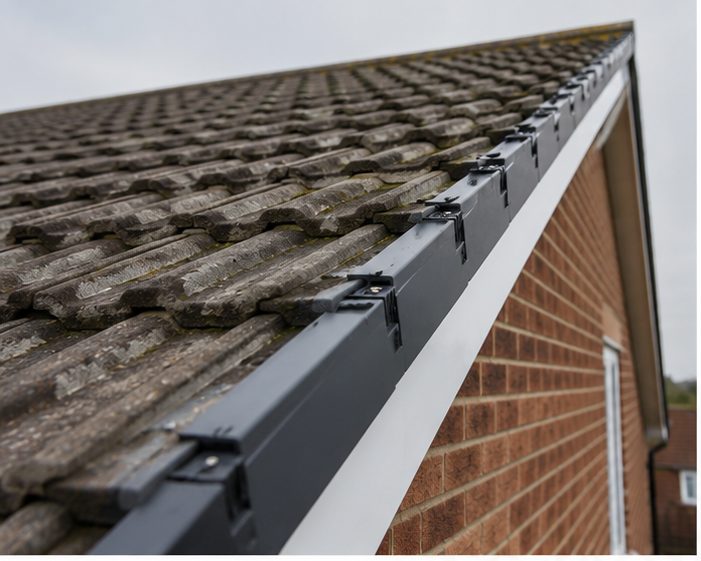
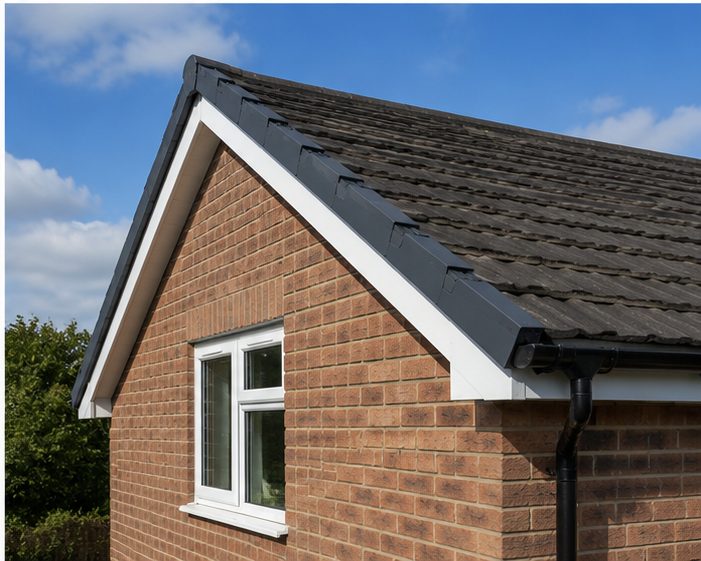
The inter-war and post-war estates include many gable-ended semis and short terraces, and their mortar verges are typical weak points. When we re-roof or repair one of these, swapping the old mortar edge for a dry verge removes a repeat maintenance job. That saves going back to the same gable every few seasons and keeps loose mortar off the garden path.
Roof tiles in Henbury vary from house to house, and compatibility depends on the tile profile. We check on site before ordering anything. A dry verge will not cure a roof failing elsewhere, so we look at the surrounding covering as well. Where the answer is a repair elsewhere first, we say so plainly.
Dry verge work we offer in Henbury
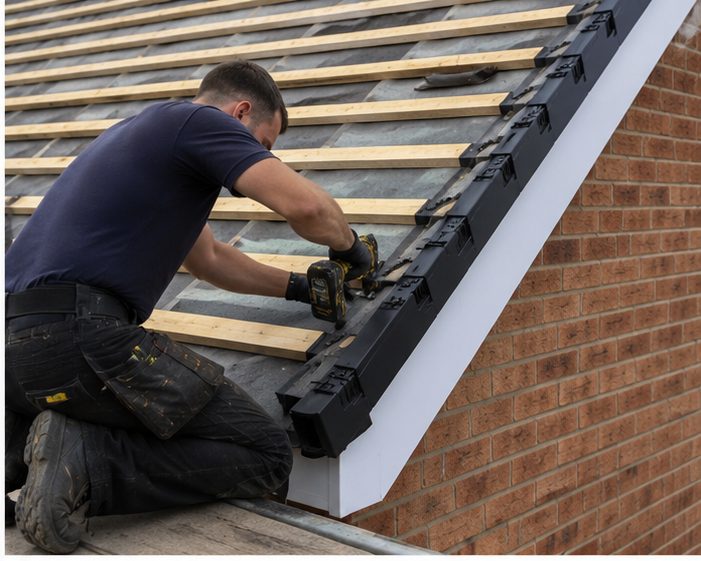
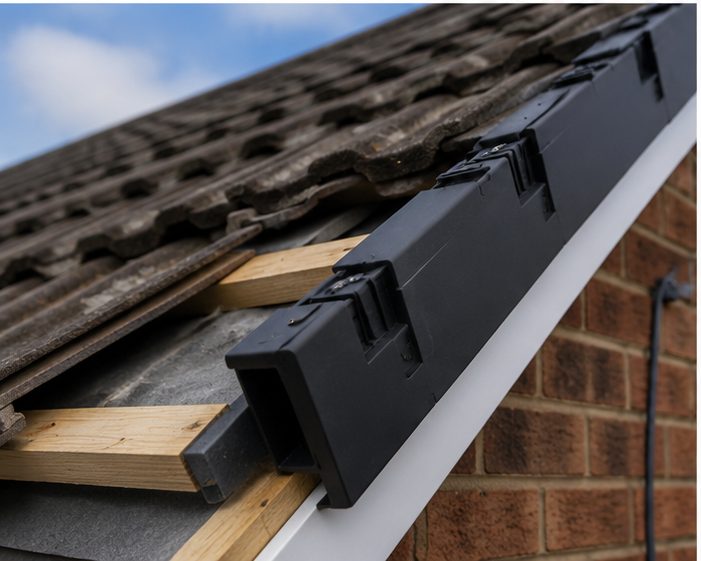
- New roof dry verge. On new roofs the verge units, tile-end pieces and caps are fixed as the covering goes on, so the edge is secure from day one.
- Dry verge with a re-roof. When we strip and relay a roof, the old mortar verge is replaced with a dry system as part of the new covering.
- Failed mortar replacement. We chip out cracked mortar on an existing gable and fit dry verge units, fixed according to the tile maker's guidance.
- Verge tile refixing. Loose edge tiles are refixed or replaced before the verge units go on, so the base of the work is firm.
- Cap and tile-end finishing. Matching cap and tile-end pieces finish the gable edge and keep weather, birds and insects out of the roof.
- Wind-damaged verge repair. After a storm we make the verge safe, then replace damaged tiles and units so the edge is restored properly.
How we fit dry verge in Henbury
We start with a look at the existing verge from safe access, noting cracked or missing mortar, loose edge tiles and the tile profile. That profile tells us whether dry verge units will suit, and we confirm it on site before fixing anything. Guessing at this stage leads to mismatched parts.
The work follows the tile maker's guidance. Old mortar comes out, the battens and edge tiles are checked, and the units are fixed mechanically. If other parts of the roof need work, we explain that before you commit to the verge. Anything else we notice on the way, such as slipped tiles or tired flashing, we raise at the same time.