Flat Roofs Behind Lawrence Hill Terraces
Dense Victorian terraces and later blocks leave little room, so homes here have grown backwards with extensions that carry flat roofs. Many were built over time by different people, so the quality under the covering varies a lot. In yards this tight, there is often no safe route for a heavy delivery, so the roof system we recommend has to be practical to carry through the house.
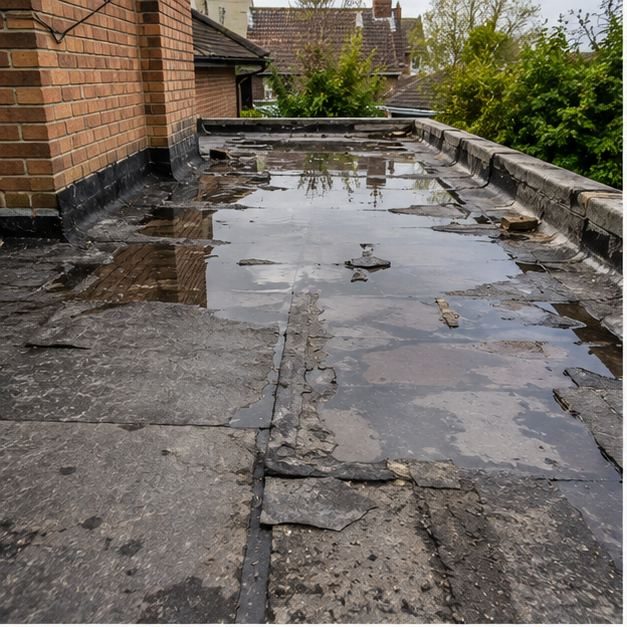
Tight yards mean water has few places to go. A small flat roof can drain into a neighbouring wall, a shared gully or an outlet that has silted up, and standing water soon works at the covering and the joint with the old back wall. Older extensions in Victorian terraces were sometimes built directly onto old yard walls, and the junction is rarely as watertight as it looks.
Surrounding walls also trap leaves and debris. A blocked outlet or a gutter full of silt is a regular cause of ponding, and a roof that holds water for long enough can soften the deck beneath without any obvious sign inside. Roofs shaded by high walls stay damp longer, and moss and algae grow on them, which holds more moisture against the covering.
Flat Roof Work in Lawrence Hill
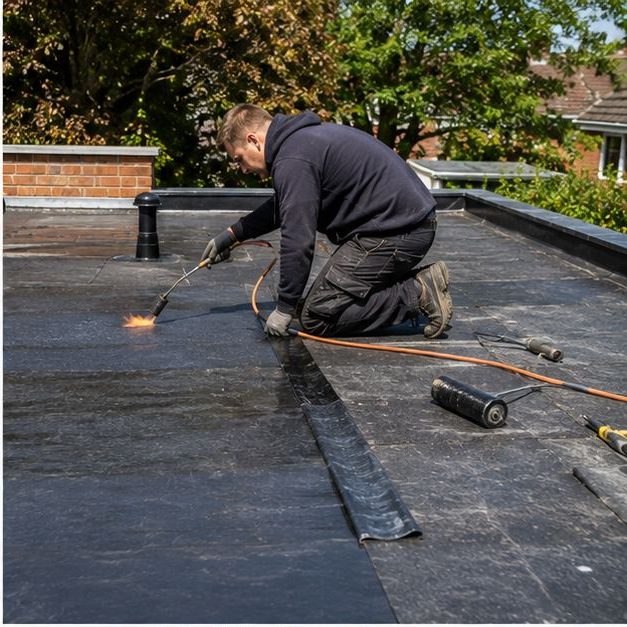
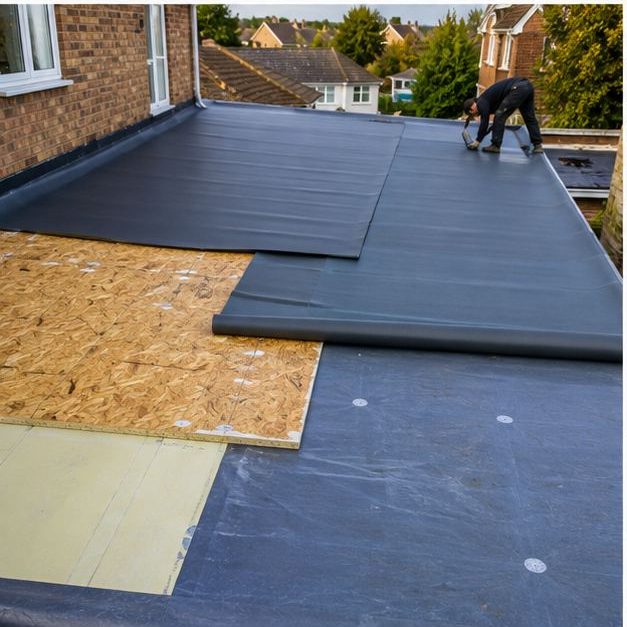
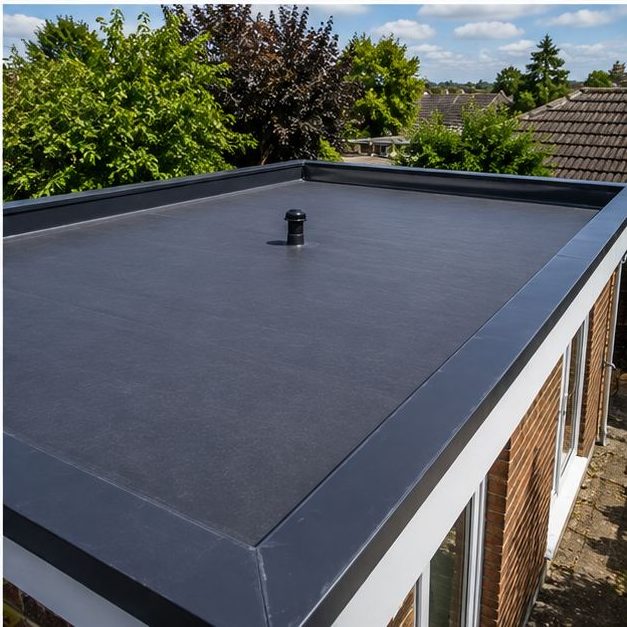
- Extension roof replacement. Stripping a failed kitchen or bathroom extension roof and fitting a new covering over a sound deck with proper falls.
- Ponding and outlet clearance. Clearing or renewing blocked outlets and correcting falls so water leaves the roof rather than sitting on the covering.
- Wall upstands and abutments. Renewing the upstand and flashing where the flat roof meets the old back wall or a neighbour's wall.
- Splits and failed joints. Repairing cracks, blisters and opened joints where the covering has failed in places but the roof is otherwise sound.
- Rotten deck replacement. Replacing wet or soft boards found under the old covering, so the new roof is laid on something firm.
- Edge trims and drip details. Fitting new edge trims that throw water clear of the wall and stop it running back underneath the covering.
How We Approach Flat Roofs in Lawrence Hill
Access to rear extensions is often through the house or along a narrow passage, so we plan the route and where materials will sit before we start. We look at the roof surface, the outlets and the wall junctions, and inside at the ceiling beneath. We also check whether a neighbouring gutter or downpipe discharges onto your roof, as that is a quiet cause of repeat damage.
We then explain what we found and what we recommend. A localised fault may only need a repair. If the covering has failed across most of the roof, or the deck is rotten, we explain why replacement is the better route and discuss materials in plain terms. Old covering is taken out of the house carefully, and we protect floors and walls along the route.