Why dry verge suits Shirehampton's exposure
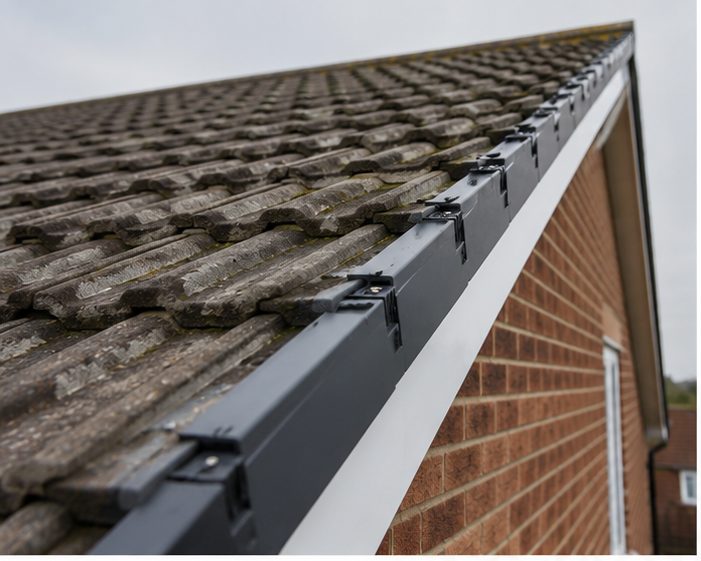
Westerly wind is the reason dry verge matters here. A gable edge is where the wind gets under a roof most easily, and tiles bedded only in mortar can lift once the bedding cracks. Units fixed to the roof structure resist that better and do not rely on something that weathers. Nothing is added to the job unless we can show you why it is needed.
Many Shirehampton houses are inter-war and post-war semis and short terraces with gable ends facing the weather. The first sign is usually mortar fragments on the path or the drive below, or a tile at the edge sitting at an angle. By that point, rain is usually reaching the timbers. You are welcome to ask questions at any stage of the work.
A broken verge also lets weather, birds and insects into the roof edge. Dry verge closes that gap. It is not a cure for a roof that is failing elsewhere, and whether it fits depends on the tile profile, which we check on site before we recommend anything. We keep the work area tidy and protect paths, drives and gardens as we go.
Dry verge work in Shirehampton
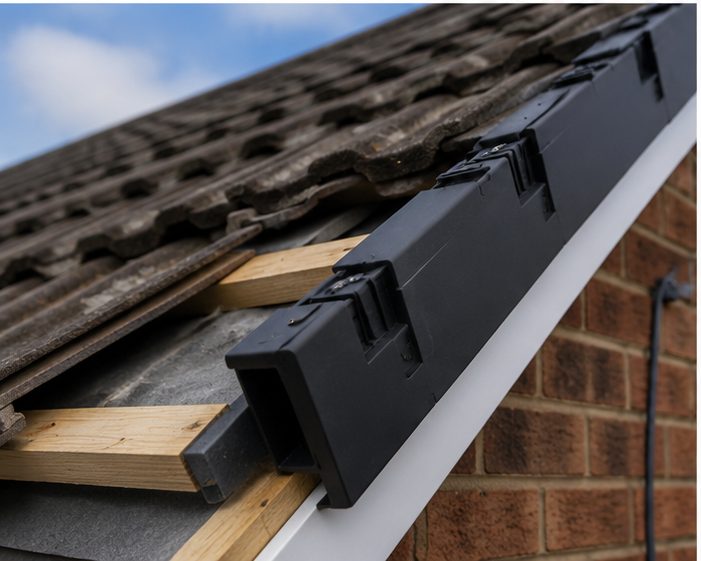
- Failed mortar replacement. Removing cracked and loose verge mortar and fitting dry verge units, so the gable edge no longer depends on bedding that weathers.
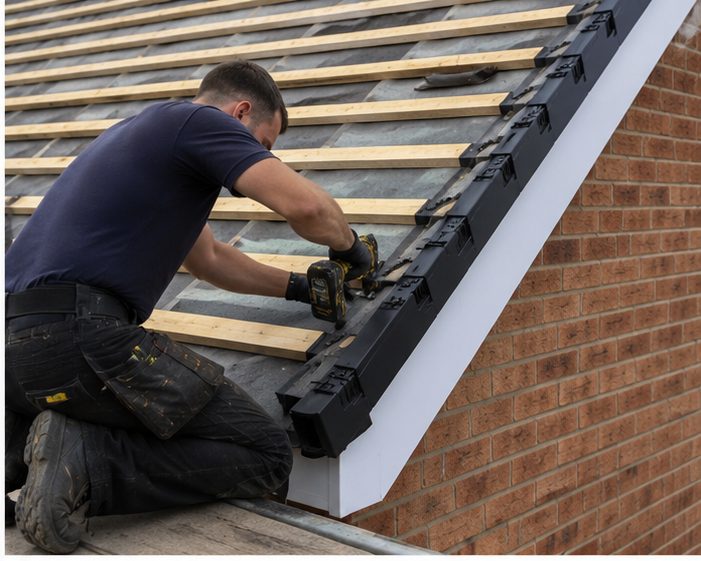
- Dry verge on re-roofs. Including the verge system from the start when a roof is stripped and relaid, with units and fixings matched to the new tiles.
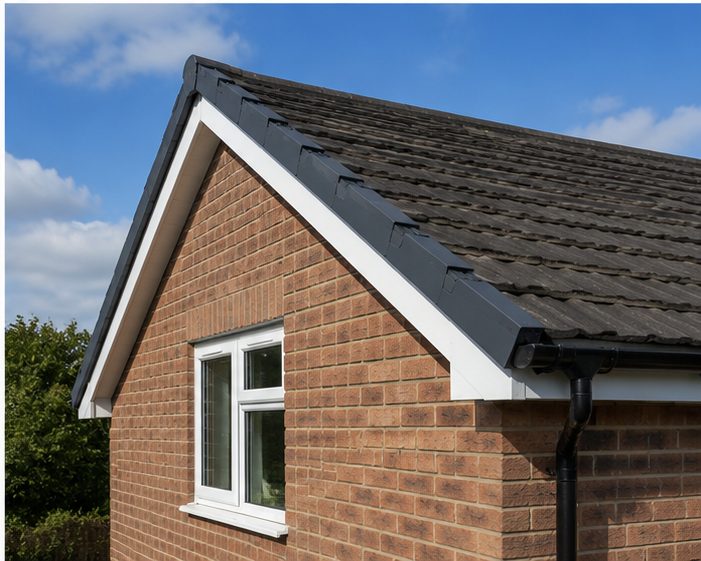
- Gable-end terrace and semi verges. Fitting dry verge to the end gables of semis and short terraces, where westerly gusts do the most harm.
- Tile-end and cap pieces. Fitting the end and cap pieces that finish the verge cleanly at the ridge and eaves, and keep weather out.
- Barge timber check. Looking at the timber under the verge for rot or damp, and advising before new units are fixed over it.
- Edge tile re-fixing. Re-securing loose edge tiles along the verge so the new system sits on a firm, well-fixed edge.
How we fit dry verge in Shirehampton
We start by checking the tile profile, because dry verge compatibility varies from one tile to another. We also inspect the battens, felt and barge timber along the edge, since there is no point fixing units onto a roof that is failing elsewhere. We tell you plainly what we find.
Access to a gable edge usually means a ladder or tower from the side, and we keep falling debris off paths and cars. The old mortar comes away, the units are fixed to the tile maker's guidance, and the edge is left neat. In windy weather, we hold off until it is safe.