
The time a leak can wait depends on what the water reaches, not on a calendar. On Ridgeway's hipped roofs and extensions, a few things decide how quickly harm builds up.
A leak in a Ridgeway house can be small at the start and still do real harm if it keeps getting in. The question is not how many weeks you have but where the water settles. Here is what makes a leak more or less urgent, and what you can safely do meanwhile.
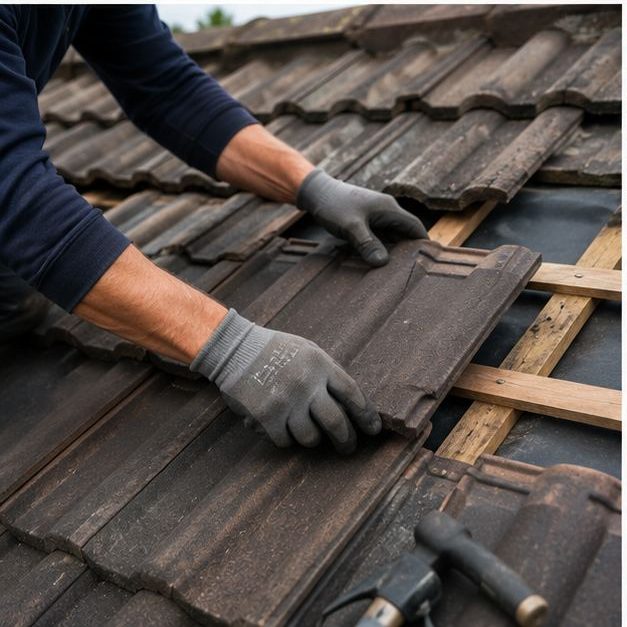
It depends on where it lands
Water landing on a well-ventilated rafter does less harm than water soaking loft insulation or the top of a plasterboard ceiling. Insulation holds moisture against timber for a long time. A leak above a bedroom with ceiling plaster takes on a different priority from one above a quiet corner of a garage.
Garage and extension roofs add their own risk. A flat roof or a lean-to that leaks onto a wall plate can soak masonry and timber without anyone noticing, because the space is rarely heated or looked at. Those leaks can run for a long time before a stain finally appears indoors.
Why hips and joins matter
On a hipped roof, water that gets in at a hip tile can run down the hip rafter and into the corner of two ceilings. The same goes where an extension roof meets the old one. In those places water tends to show late and spread wide, so waiting can be more costly than it looks.
- Leaks at joins and hips often run along timber before showing
- Wet insulation holds water against rafters and ceilings
- Repeated wetting invites rot and mould
- Electrical fittings near a stain make it urgent straight away
Signs the damage is moving on
A stain that grows after each rain, paint that bubbles, a ceiling that sags or feels soft, and a musty smell are all signs the leak is working into the structure. Dark patches on loft timbers and wet felt tell the same story. If you see these, do not wait for the next dry spell.
A stain that has dried is not proof the leak has stopped. Water often stays in the structure after the surface looks fine, and the next rain brings the mark back. If a ceiling has been stained and repainted, it is worth mentioning when you call, because it tells us the leak has been there before.
What to do in the meantime
Catch drips in a bucket, move belongings and electrics out of the way and look at the loft from the hatch if you can do so safely. Take photographs. Keep off the roof and do not use a ladder against it. Then get in touch, so we can see it before the next wet spell.
What we do on the visit
We find the source, make it watertight and tell you what else we see. In many cases the repair is small, and prompt action keeps it that way. Where the leak has already affected timber or insulation, we explain what to dry out, replace or watch. If the covering has failed in several places, we also talk through whether repair still makes sense.
Frequently Asked Questions
Is a leak that only happens in strong wind urgent?
It can wait a little longer than a constant drip, but it is still letting water in. Wind-driven rain finds gaps again, and each wetting adds to the damage. We would still suggest a prompt look.
Will wet insulation dry out by itself?
It may dry slowly in a warm, ventilated loft, but it often holds damp against timber for longer than you expect. Once the source is fixed, we advise whether the insulation needs replacing.
Should I move stuff out of the loft?
If it is below the leak or under a stain, yes. Damp spoils boxes, fabric and stored belongings quickly. Move things only if you can do it safely from the hatch, and keep clear of any wet areas.
Talk to our team about roof repairs in Ridgeway
Every roof is different — the fastest way to get an accurate answer is a quick chat with our team.