What Goes Wrong on Kingswood's Hipped Roofs
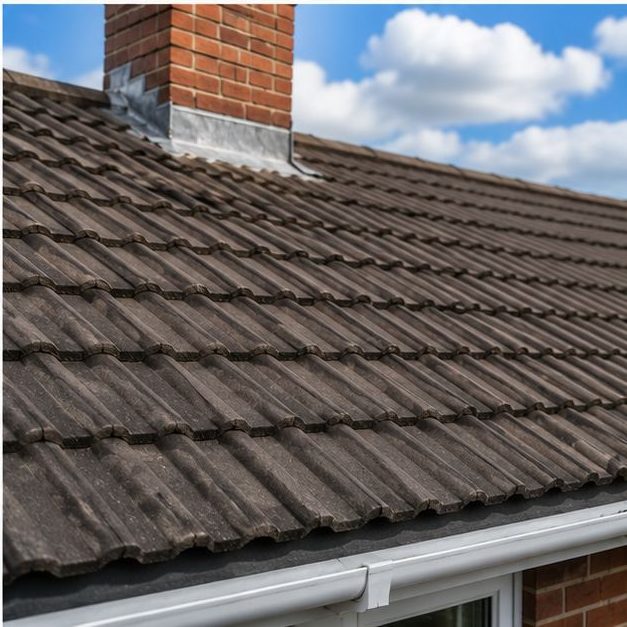
The inter-war and post-war estates here are full of hipped tiled roofs. A hip has more joints than a gable: a ridge, hip tiles running down each corner and valleys or junctions where roofs meet. Each is a place for bedding to crack and tiles to slip. The pattern is familiar across the estates: houses built to the same plan tend to show the same weak points around the same time.
Hip ends are a typical trouble spot. The mortar under hip tiles dries out and falls away, tiles start to shift, and rain gets in along the line of the hip, often showing as a stain in a corner of a bedroom rather than under the hip itself. Tile-and-a-half repairs, as they say in the trade, can look fine from the pavement but hide a rotten batten underneath.
Garages and extensions add more junctions, where a lower roof meets the main wall. Lead flashings at those joints loosen with movement, and a small gap there can let water into a house for a long time before anyone notices. Hips and ridges are the places we are asked about most, and they are quick to check but expensive to leave.
Repairs We Carry Out Around Kingswood
- Hip and ridge re-bedding. Lifting loose hip and ridge tiles and bedding them again, a common repair on hipped roofs where old mortar has dried and cracked.
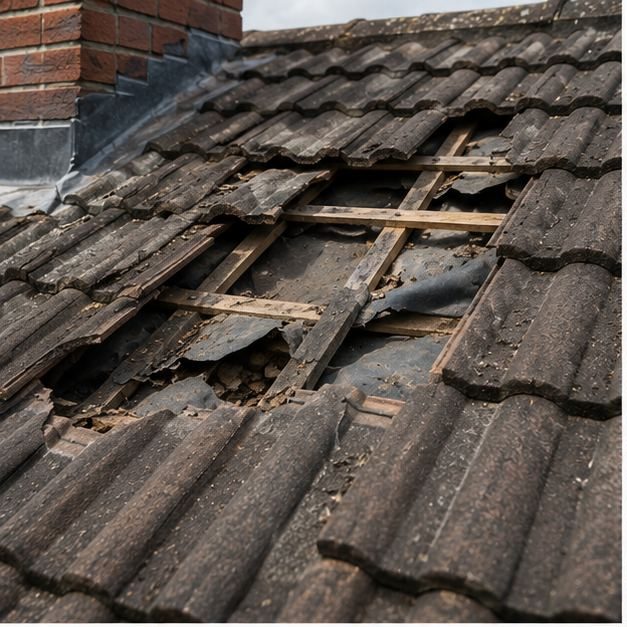
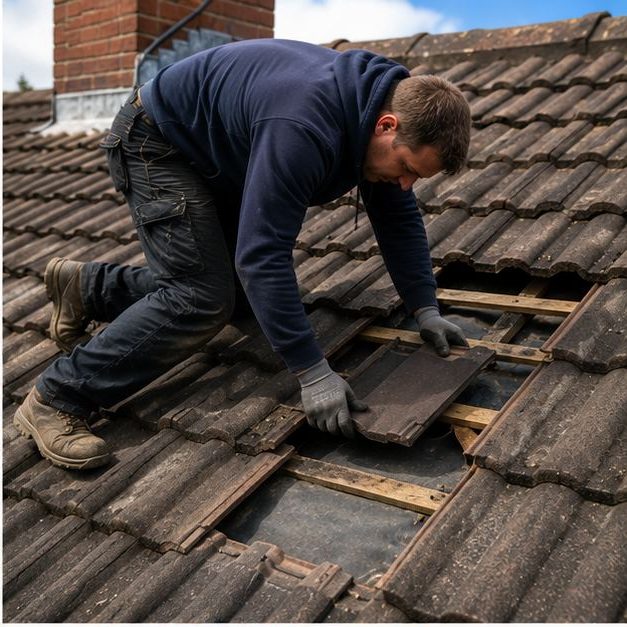
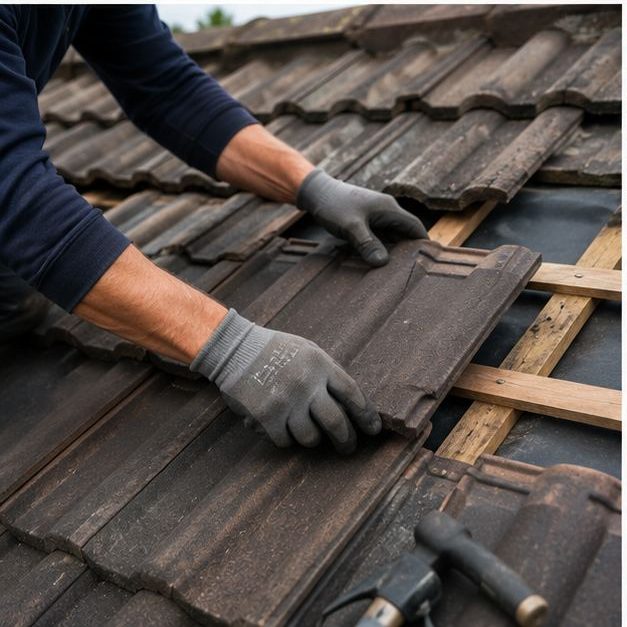
- Slipped and cracked tiles. Replacing damaged tiles and checking the battens and felt behind them so the repair does not leave a hidden weak spot.
- Lead flashing and valley repairs. Renewing lead at chimneys, walls and valleys where water collects, particularly where garages and extensions meet the main house.
- Verge and gutter-edge repairs. Making good the roof edges at gables and eaves, where loosened tiles let wind and rain get underneath.
- Leak tracing. Following damp back along timbers and felt to the real entry point, even when the stain appears well away from it.
- Storm-loosened coverings. Re-fixing and replacing tiles that have been disturbed by wind, and checking the surrounding area for further movement.
How We Go About Repairs in Kingswood
Terraces and semis here are often reached through a side passage or past a garage, so we sort out safe access before starting. We look at the roof from the ground, then the loft, checking rafters, felt and insulation for damp trails. We photograph the problem areas so you can see what we are talking about without going near the roof.
We then look closely at the hips, ridge, valleys and flashings, since that is where most faults sit. You get a clear account of what is wrong. If a repair will hold, we do that. If the covering has had its day, we say so and explain why. If we spot something unrelated that can wait, we mention it once and leave it with you.