Repairs on Ashley Down terraces and semis
The streets here run down towards the railway, and the terraces are long, unbroken rows with shared party walls. That means a lot of chimney stacks, a lot of abutments where one roof meets the next, and plenty of flashing that has been patched more than once over the decades. Because the rows are so uniform, one house's failed joint often means the neighbours' are close behind, though we only advise on your own roof.
Bay-fronted houses are a feature of the area. The small roofs over each bay have their own valleys, lead work and tiling, and they often leak quietly because they are hard to see from the street. We check them on every visit to a bay-fronted terrace. Because bay roofs sit below the main slope, they receive water running off the roof above as well as their own rain.
Inter-war semis have a different pattern. Their hipped or gabled roofs are simpler, but the tile and ridge work shows its age, and rear extensions add extra joints where the old and new roofs meet. Water finds those joints first. Rear extensions add another set of joints, and where a lean-to meets the main wall we often find lead that has lifted or split.
Roof repairs we carry out in Ashley Down
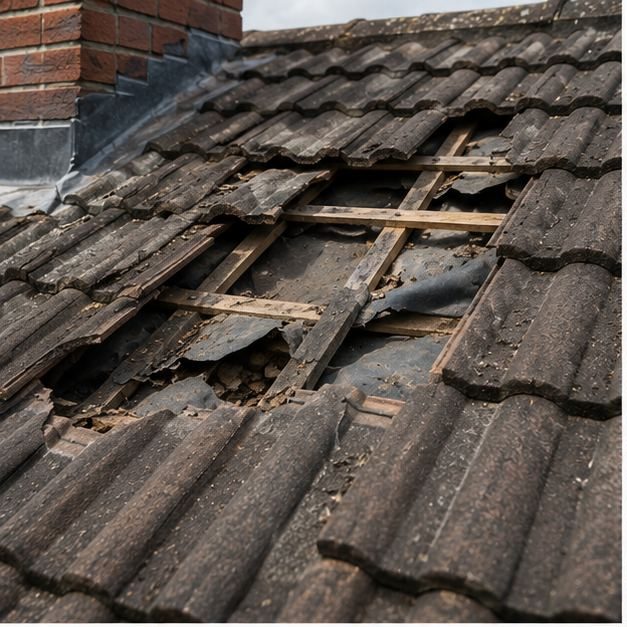
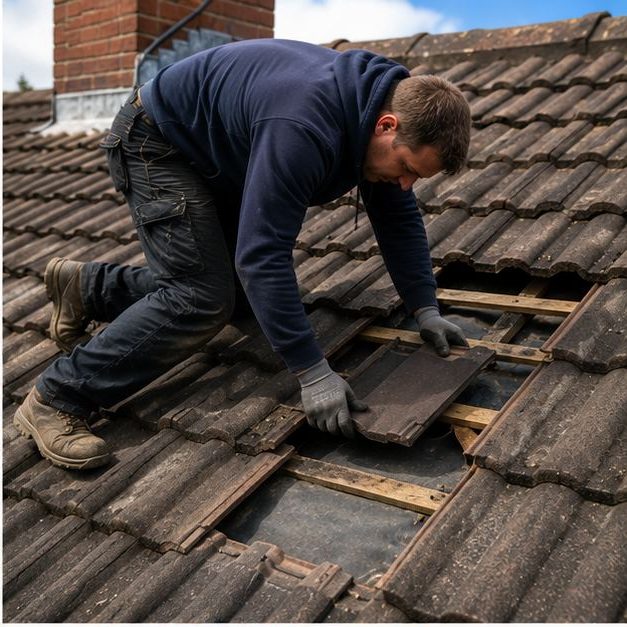
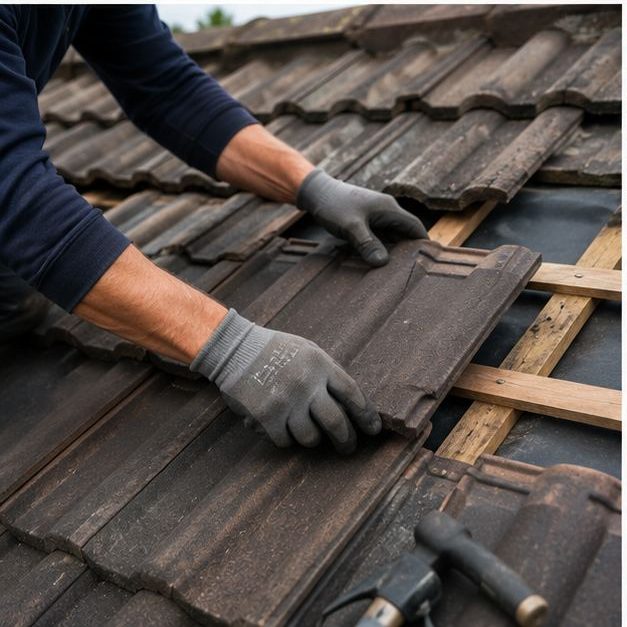
- Slipped and missing tiles. Tiles that have dropped, slid or cracked are replaced or re-fixed along terrace rows and semis, with the battens beneath checked for rot.
- Cracked or loose slates. Slated roofs on older terraces get individual slates replaced, matching the size and style so the courses stay neat and watertight.
- Ridge and hip re-bedding. Ridge and hip tiles whose mortar has cracked are lifted and rebedded or refixed, sealing the top of the roof against rain and wind.
- Bay roof repairs. The small lead and tiled roofs above bay windows are repaired where valleys, flashings or tiles have failed and are letting water in quietly.
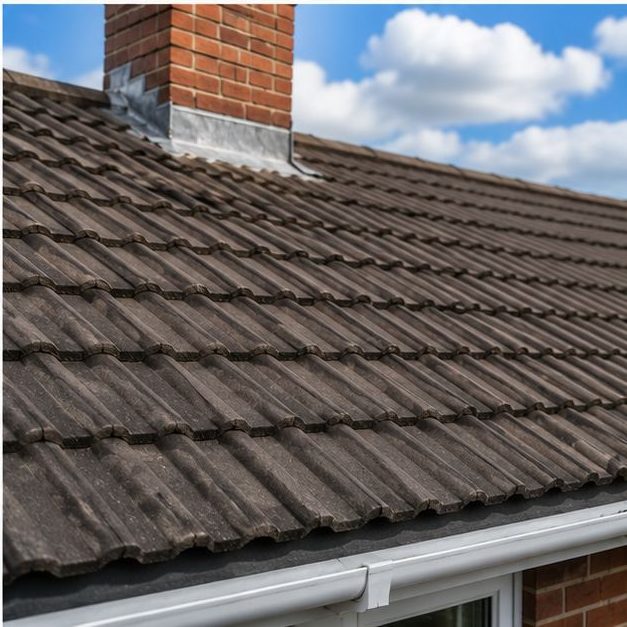
- Chimney and party wall flashings. Lead flashing around chimney stacks and along party walls is repaired or renewed, since long terraces have many such joints.
- Leak tracing and storm repairs. Leaks are followed back through felt and timbers to the true entry point, and storm-loosened coverings are secured and replaced.
How we handle roof repairs in Ashley Down
On a dense terrace the first question is access. We look at how the roof can be reached from the front and rear, and whether a neighbour's yard or alley is involved, then plan the work so it is safe and causes little disruption along the row. Narrow gaps between houses mean we think about ground protection and where tiles and tools will be placed.
We check inside the loft as well as outside, because water travels along timbers before it shows. Then we explain what we found: what is failing, what is merely ageing, and whether a repair or a bigger job is the honest answer. We then give you our view in everyday language, with the reasons, so you can compare it with any other opinion you get.