Roof Repairs on Filton's Hipped and Estate Roofs
A hipped roof slopes on all sides, so there is a hip line at every corner. On Filton's inter-war houses those hip tiles were bedded in mortar, and where the bedding has cracked and dropped, rain finds its way under the tiles and into the roof timbers. That is why we check each hip first.
The estates here were laid out with wide streets and houses with generous gardens, so roofs are open to the weather from several directions. Wind lifts edges and ridge tiles, and a storm can leave a slipped tile or a gap at a hip that was not there the day before. Both can be checked from the ground.
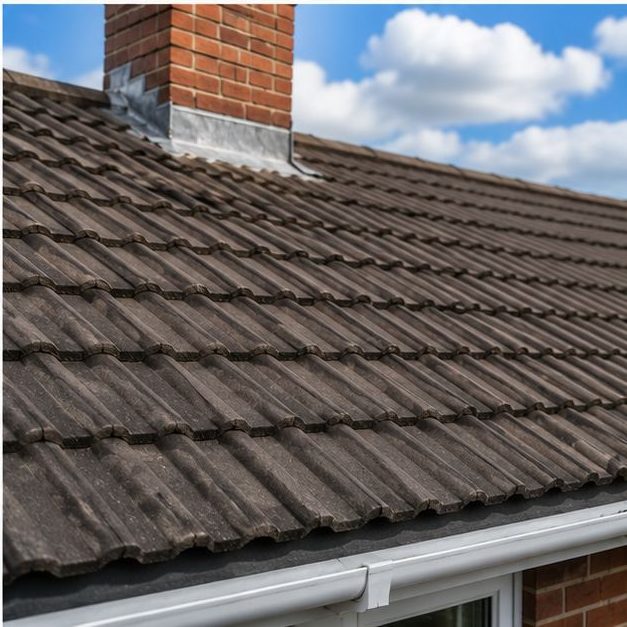
Post-war homes and modern infill have different tiles and details from the inter-war houses beside them. A repair is matched to the covering that is actually there, with the right fixings, so the patch blends in and does not leave a weak spot. Fixings are chosen to suit the existing tile, which keeps the repair neat and secure.
Roof Repair Services in Filton
- Hip tile re-bedding and repair. Lifting loose hip tiles and re-bedding them securely, a common job on the many hipped roofs of Filton's older estates.
- Ridge re-pointing and re-bedding. Renewing cracked mortar bedding and loose ridge tiles so wind and rain cannot work under the top of the roof.
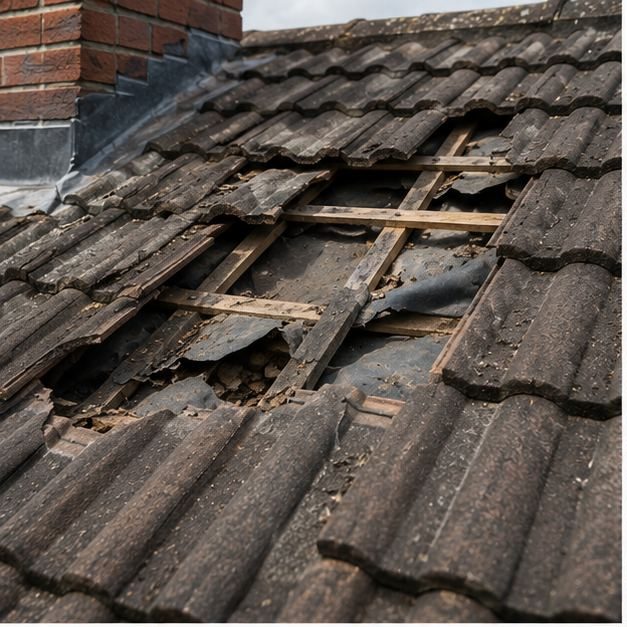
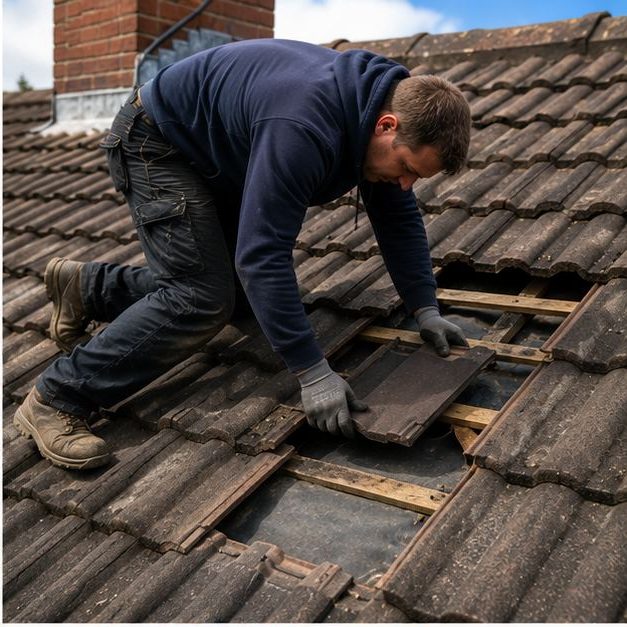
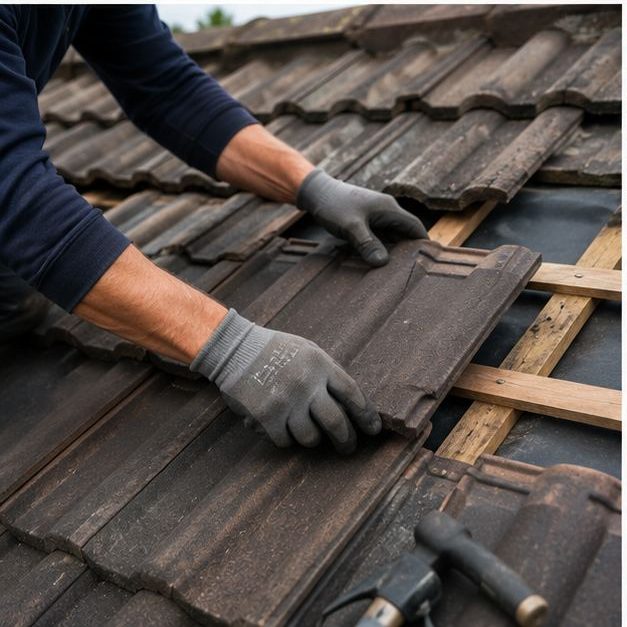
- Slipped, cracked and missing tiles. Replacing damaged tiles and re-securing their neighbours, so a repaired area is held as firmly as the rest of the roof.
- Lead flashing and valley work. Repairing or renewing lead at chimneys, abutments and valleys, where hipped roofs and extensions meet at awkward angles.
- Verge and gutter-edge repairs. Making good the roof edge at gables and above the gutter, where loose mortar and storm damage tend to show first.
- Leak tracing and storm damage. Following a damp patch back along the timbers and felt to the true entry point, then repairing what the weather has loosened.
How We Approach Roof Repairs in Filton
Wide streets and open frontages usually mean easy access, so most repair visits begin with a look from the ground and the loft. We check hips, ridges and chimneys from a safe position, then go inside for daylight, damp timbers and wet felt that show where water has travelled.
After that we explain what we found, with the repair options and a plain view on whether a patch will last or a larger section needs attention. We keep the repair as small as honestly possible, and we tell you before work starts if scaffold or a tower is needed.