Repairs to Hillfields Semis and Terraces
Hillfields sits on a hill in east Bristol, and the housing is mostly inter-war and post-war. A hillside position means roofs take wind and driven rain from the open side, and the tiles along ridges and gable edges are the ones that tend to loosen first. Checking those lines from the ground after a windy spell is a sensible habit, and it costs nothing.
The semis here have long, simple roof slopes, so one defective hip or ridge can let water in over a wide area. Short terraces share a line of ridge and several flashings along party walls, and a failure at one point can affect the neighbours' roofs as well. Sharing a wall is useful to know, because water that enters at the party line can appear on either side.
Garages and small extensions add joins where a pitched slope meets a wall or a flat section. Those junctions rely on lead and sealing that ages quicker than the tiles, so they are often the true cause when an upstairs ceiling goes brown. Keeping the lead and the sealant sound there prevents most of the internal damp we are called to.
Repair Jobs We Handle in Hillfields
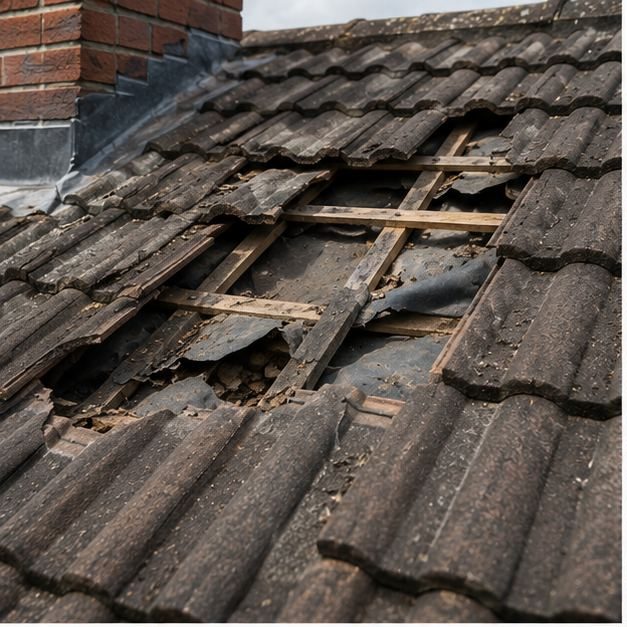
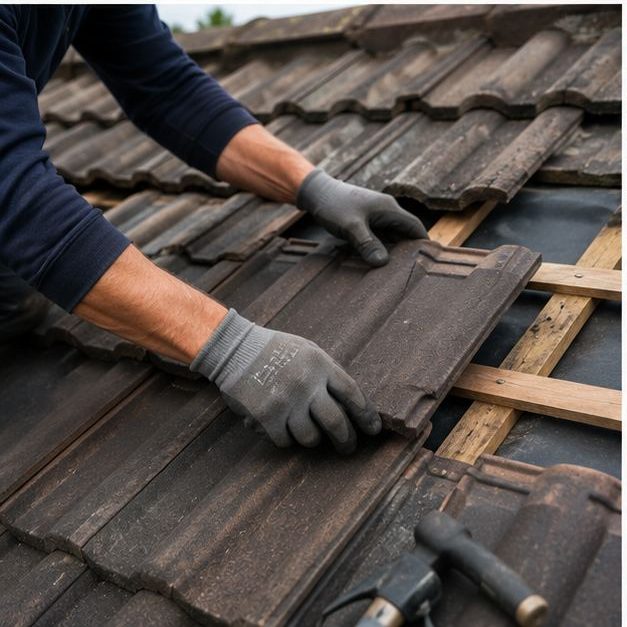
- Loose and missing tiles. Re-fixing or replacing tiles that wind has lifted, then checking the battens and felt under them before the slope is made good.
- Cracked and broken slates. Replacing individual slates that have split or slid, matching the existing roof as closely as the available stock allows.
- Ridge and hip repairs. Taking off loose ridge and hip tiles and bedding them again, so the long lines on a semi hold firm in a blow.
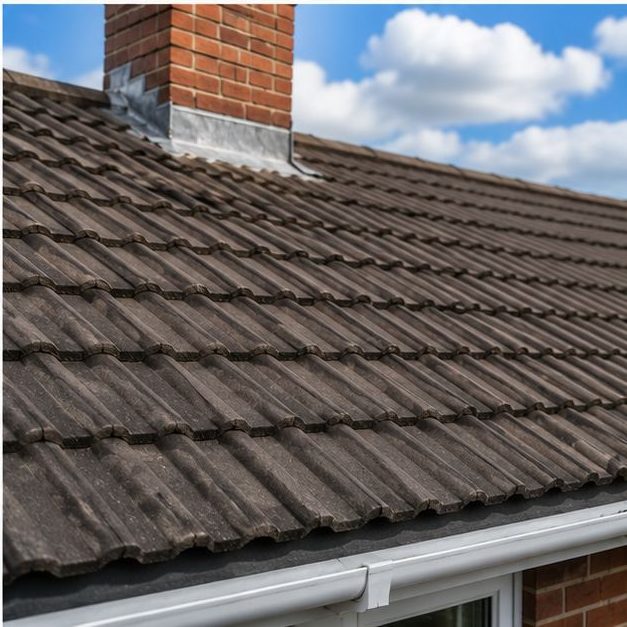
- Flashings along party walls. Renewing the lead and sealing where terrace roofs meet shared walls, chimneys and the side of an attached garage.
- Valley and gutter-edge fixes. Repairing valleys and the lower edge of the slope where water overshoots a gutter and soaks the eaves.
- Storm-loosened coverings. Securing and replacing tiles and edge pieces after a gale, starting with whatever is leaving the roof open to rain.
How a Hillfields Roof Repair Goes Ahead
We begin indoors with ceilings, the loft and the underside of the roof, and look at the garage and extension junctions from the ground. Together those clues usually point to the area we need to inspect on the slope itself. That sequence stops us guessing, and it spares you paying for work in the wrong place.
Once we have seen the fault we tell you what it is, how far it reaches and what we would do. A single repair when that is enough, a larger job when it is not, and the reason behind each, so you are never asked to take it on trust.