Flat roofs on Warmley houses and garages
Many Victorian houses in Warmley have had a kitchen or utility extension added to the back with a flat roof. Where that roof meets the older wall, the upstand and flashing are the weak point and often the first thing to let water in. Older village buildings often hide earlier repairs that only show once we look closely.
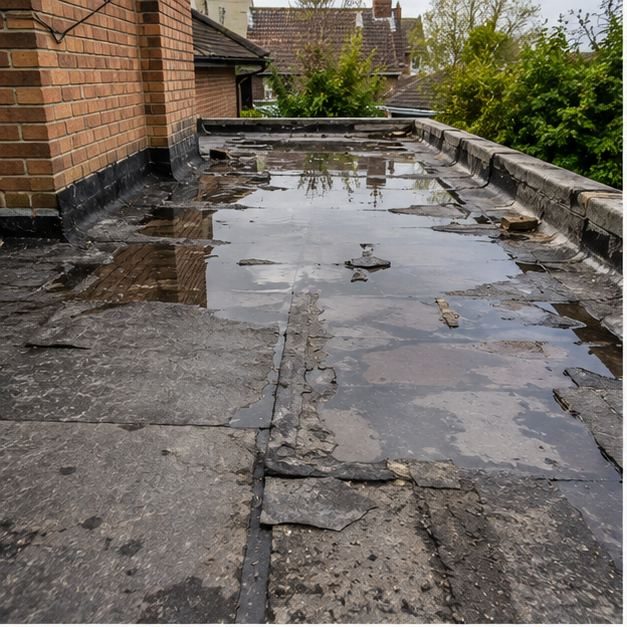
Garages on the later estates tend to have simpler flat roofs, often left alone for a long time. Leaves from nearby trees, particularly on streets close to woodland, settle in corners and block outlets, so water ponds and wears the surface from above. Victorian houses here have the detailing, and the wear, that comes with their age.
Dormers and porches on older buildings are small enough that a failed joint can go unnoticed until a ceiling stains. We check the deck for softness and the insulation beneath if it is exposed, because those details decide whether to repair or replace. Victorian houses here have the detailing, and the wear, that comes with their age.
Flat roofing work in Warmley
- Extension roof repair. Local splits and failed joints on a rear extension roof are cut out and repaired, where the rest of the covering is sound enough to keep.
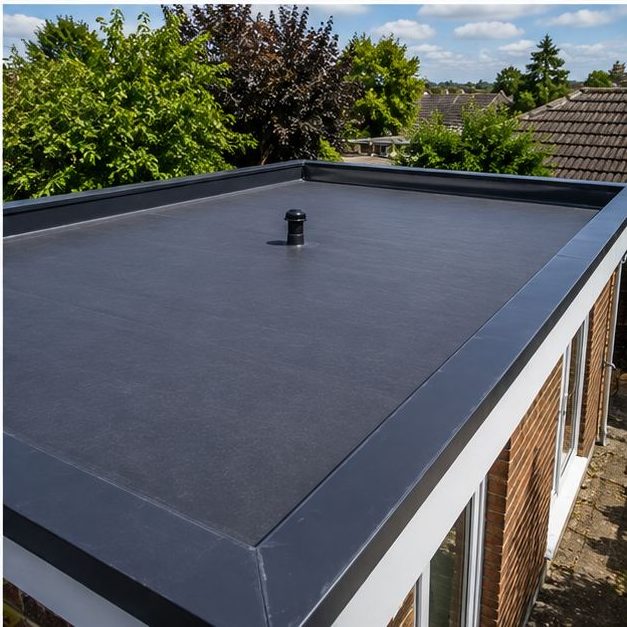
- Garage flat roof renewal. Where a garage roof has failed widely, the old covering is removed and a new system fitted, with edge trims replaced.
- Dormer and porch roofs. Small flat roofs over dormers and porches are repaired or recovered, with the junctions against tiles and walls sealed properly.
- Ponding and blocked outlets. Standing water is traced to blocked drainage or poor falls and put right, which matters under leafy streets near woodland.
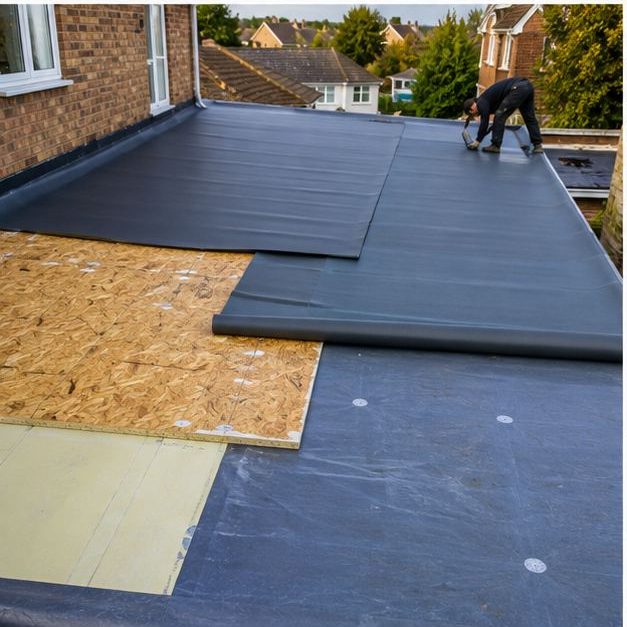
- Deck and insulation repairs. Soft or rotten boards found under the old covering are replaced, and insulation and falls are reviewed before the new surface goes down.
- Upstands and abutments. Where the roof meets a wall, upstands and flashings are renewed so water cannot get behind the covering.
How we assess a flat roof in Warmley
We begin inside, looking at stains and any signs of dampness, then examine the roof surface, outlets and edges. On older buildings we also look at how the flat roof was joined to the existing structure. We would rather spend time on the explanation than leave you unsure what you are paying for.
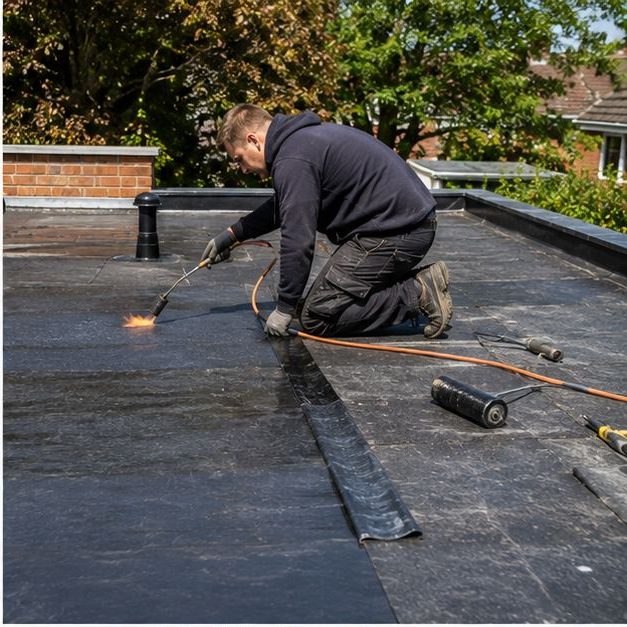
We then explain what we found and what each option involves, including materials such as single-ply rubber, fibreglass or felt systems in plain language. Where insulation or falls change, Building Regulations checks may apply — we advise before work starts. We would rather spend time on the explanation than leave you unsure what you are paying for.