Fascias and soffits on Warmley buildings
Older village buildings often have timber boards that have been repainted so many times the shape has softened. Behind them there can be damp rafter ends, and we check what existing soffit boards are made of before disturbing them, then explain what we find. Streets near woodland keep their roofs damp for longer after rain.
Victorian houses in Warmley may have deeper eaves and decorative bargeboards. Replacing them in UPVC gives a clean, even line and ends the cycle of repainting, though we match the profile as closely as sensible so the house keeps its look. Older village buildings often hide earlier repairs that only show once we look closely.
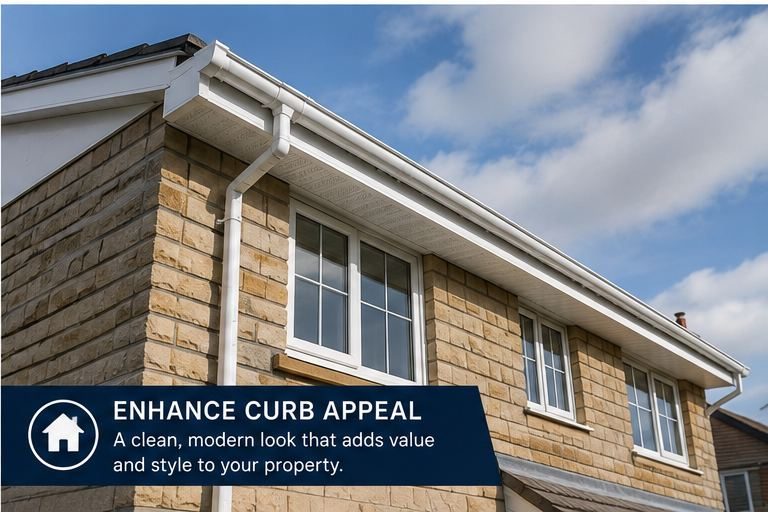
Roads near woodland collect leaves in the gutters, which overflow and soak the fascia behind. Over time that rots the board. On the later estates the boards are usually simpler, and replacing them in a single visit gives the whole roofline a fresh and consistent finish. We keep the advice practical and the explanations short.
UPVC roofline jobs in Warmley
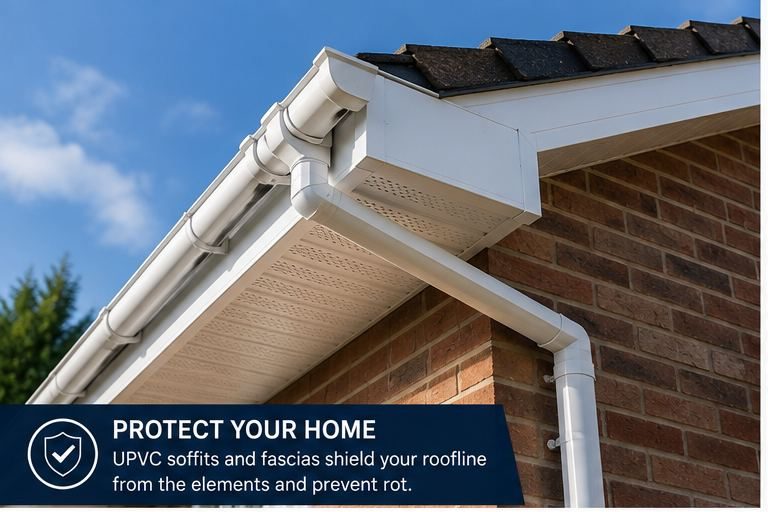
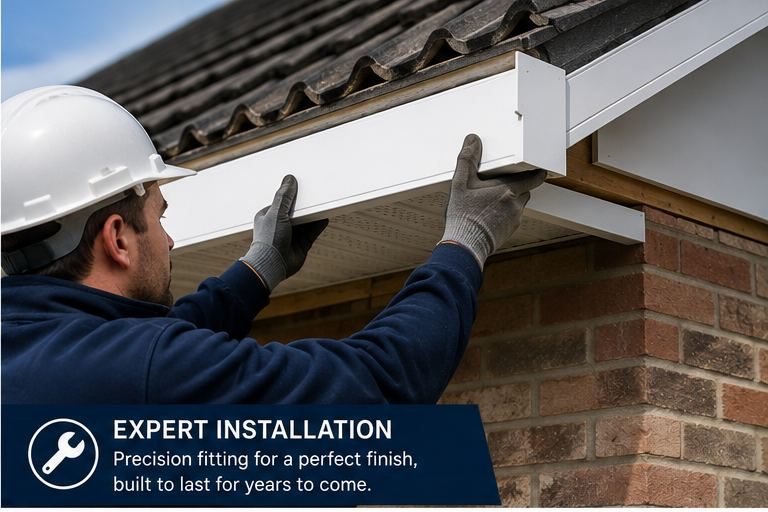
- Full fascia and soffit replacement. Old boards and gutters come off, rafter ends and eaves are checked, and new UPVC boards are fitted along the roofline.
- Bargeboard replacement. Boards at gable edges are replaced in UPVC, with the roof edge underneath checked first.
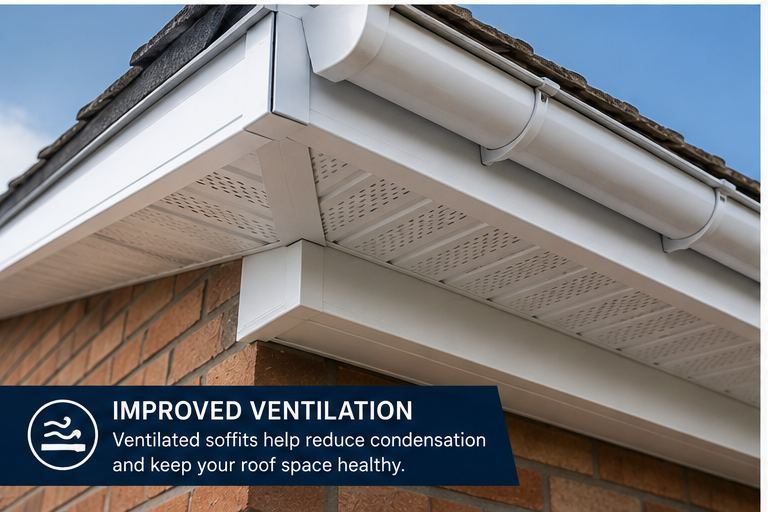
- Vented soffits. Vented soffit boards or vent strips let air move through the roof space, helping to reduce condensation in lofts.
- Gutter replacement alongside. New gutters and downpipes are fitted along with the boards, which avoids putting scaffold up a second time.
- Capping over or replacing. Where the existing boards are sound, capping over may work, and we explain when replacing is the better option.
- Repairs and partial replacement. Where only a section has rotted, we replace that part in matching white, darker or wood-effect UPVC.
How we fit fascias and soffits in Warmley
Scaffold or access towers are needed for most of the work, and we agree where they go before arriving. Leafy plots may need us to work around trees, and we always talk to you before moving or cutting anything. Nothing is started until you have seen the options and agreed the plan.
Then we remove the old boards and gutters, look at the rafter ends and eaves, fit the new boards with the correct ventilation, and refit or replace the gutters. Where the roofline changes, planning or Building Regulations checks may apply — we advise before work starts. You get a clear explanation before any decision is made.