
Small faults on a roof are quiet and quick to deal with. Left alone through a few exposed winters, they turn into something bigger. Here is what regular attention catches.
A roof on open, high ground like Kingsweston Hill does not get an easy life. Wind lifts edges, rain is driven sideways and moss settles where it stays damp. Most big roof bills start as something small that nobody looked at. A sensible routine of inspection and minor repairs keeps problems small, and keeps you informed about what is urgent and what can wait.
Why small faults get expensive
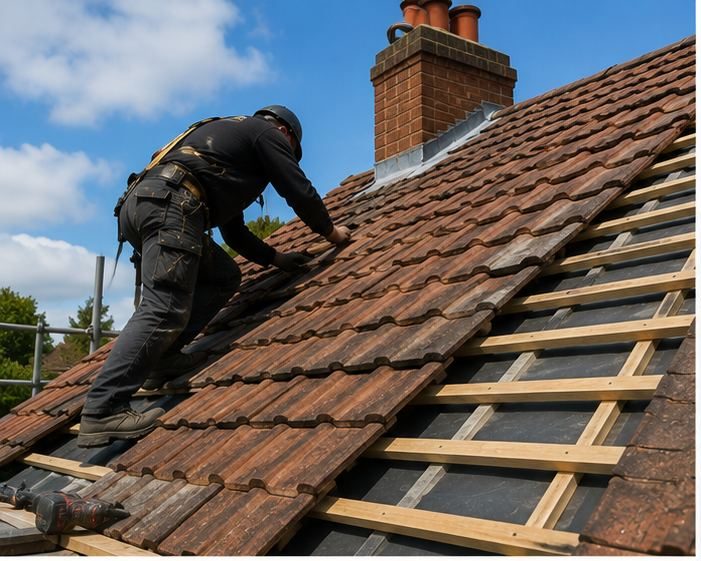
A slipped tile lets water onto the felt, the felt lets it onto timber, and the timber slowly rots. By the time a ceiling stain appears, the damage behind it may be considerable. Dealing with the single tile early takes a short visit, while dealing with rotten battens and wet insulation takes a great deal more. The sensible approach is to catch problems at the stage when a short visit settles them.
What a roof inspection covers
We look at the whole roof, not just one corner: tiles or slates, ridge and hip bedding, lead flashings, chimneys, gutters, fascias and any flat sections. We also look at the loft from inside. You get a plain explanation of what we saw, what is urgent and what can safely wait another season. Photographs where we can help you see what we are describing.
- Loose, slipped or cracked tiles and slates
- Ridge and hip bedding showing cracks
- Lead flashings lifting or splitting
- Gutters, fascias and verges worn or blocked
Gutters, moss and the edges
Blocked gutters push water over the edge and into the fascia and wall. Heavy moss holds moisture against tiles and can block valleys. Moss removal and gutter clearing are routine jobs that stop bigger problems forming. On exposed roofs the edges and verges deserve special attention, because that is where wind does its work first. Clear gutters and clean valleys keep rain moving off the roof as it should.
After a storm
Strong wind can loosen coverings without any sign inside the house. A check after rough weather picks up damage while it is still minor. From the ground you can look for tiles on the lawn, a sagging gutter or a ridge line that looks uneven, then call us for a proper look rather than going up. Tiles that have shifted are far easier to deal with than a ceiling that has come down.
A sensible routine
Most roofs benefit from a look every so often and after severe weather, with small repairs done as they appear. We keep it simple: a written note of what was found and a short list of anything to plan for. That lets you budget calmly rather than being caught out by an emergency.
Frequently Asked Questions
How often should a roof be inspected?
There is no single answer. Older roofs and exposed ones benefit from regular checks and one after any severe storm. We tell you what we would suggest for your roof after we have seen it. After a storm is a sensible time for a check as well.
Is moss removal really worth it?
Often yes, because moss holds water against tiles and can block gutters and valleys. We assess whether the roof needs treatment, and we explain how the work is done safely and without harming the covering. Moss treatment is only one part of looking after a roof.
Can I do any maintenance myself?
Keep to the ground and the inside of the house: look at gutters from below, check the loft for damp and note anything unusual. Please do not go on the roof, and call us for a proper look.
Talk to our team about general roofing services in Kingsweston
Every roof is different — the fastest way to get an accurate answer is a quick chat with our team.