
The right roof depends on the building, not on fashion. This guide looks at how pitched and flat roofing suit the Georgian and Victorian terraces, converted houses and newer flats of St Pauls.
Choosing a roof covering starts with the property: how it is built, how the roof is shaped and who looks after it. In St Pauls, the mix of older terraces, converted houses and newer flats means a single answer does not fit every street, and a whole-roof view is the best way to decide.
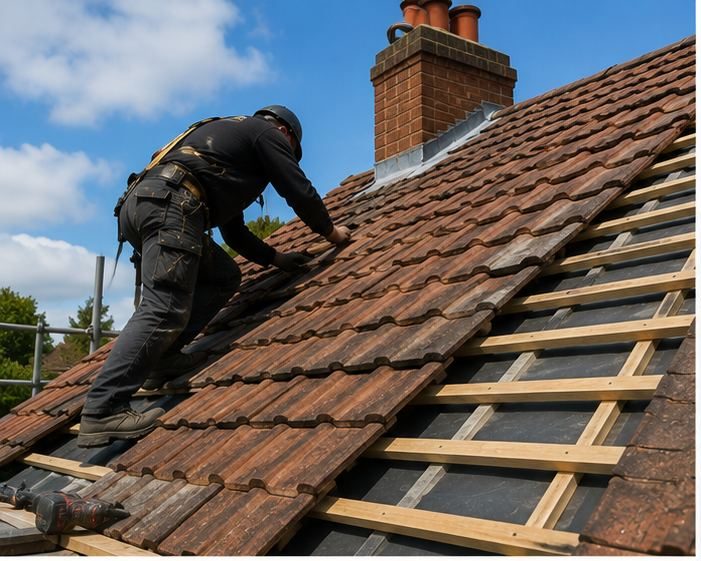
Older terraces and converted houses
Georgian and Victorian terraces were built with pitched roofs, and the covering has often been repaired or partly replaced over time. Keeping a covering that suits the character of the house and the street usually makes sense, provided the structure below is sound.
Conversions add loft rooms, chimneys, party walls and lead work, all of which need to be dealt with as part of the roof, not as extras, so we look at the whole building before recommending anything for it. We would rather get this right than rush to a quick answer.
Pitched roofs and what they are covered with
Pitched roofs are covered with tiles or slates, and the choice affects the weight on the structure, the look of the street and how well the roof copes with wind. We look at what is on the roof now, how it is fixed and whether a repair or a full re-roof is the sensible option.
Weight matters on older buildings, because the timbers were sized for the original covering. Swapping to a heavier tile or slate without checking the structure is a mistake, which is why we look at the roof space first. A quick look in the loft tells us a great deal about what the timbers can carry.
Flat roofs on extensions and flats
Rear extensions, porches, garages and the roofs of newer flats are often flat or low-pitched. Single-ply rubber, fibreglass and felt systems all have a place. The right one depends on the shape of the roof, the edge details, and how it is used, and good falls and insulation matter as much as the covering.
- Single-ply rubber such as EPDM
- Fibreglass or GRP laid in one piece
- Felt-based systems with sound detailing
- Good falls, insulation and clear outlets
The details that make a roof last
Whatever the covering, it is the details that fail first: lead flashings, ridges, valleys, gutters and fascias. A good roofer treats these as part of the job. We also advise on moss, storm damage, chimneys and regular inspections so small faults are caught early.
Chimneys, party walls and shared gutters are the details most often forgotten on terraced roofs, and they cause a fair share of leaks, so we make sure they are covered in the description of the work. Ask about each of them.
Choosing sensibly
Ask for the proposed work in writing, with the covering named and the reasoning explained. Ask how access will be arranged and how the site will be kept tidy. We explain what is urgent and what can wait. Re-roofing may need planning or Building Regulations checks — we advise before work starts.
- A written description of the work
- How access and scaffolding are arranged
- What is urgent and what can wait
Frequently Asked Questions
Should I keep the same covering on my roof?
Often yes, particularly on older terraces where the covering suits the street. If the existing covering is no longer available or is past repair, we talk through suitable alternatives and what each involves.
Is a flat roof a poor choice?
Not if it is well made. A flat roof with good falls, proper edge details and sound insulation can work well on extensions and flats. Poor detailing is what causes trouble, not the shape itself.
Do I need to replace the whole roof?
Not always. Many roofs need repairs to flashings, ridges or tiles rather than a full re-roof. We look at the whole roof and tell you honestly which approach is right, and what can be left for later.
Talk to our team about general roofing services in St Pauls
Every roof is different — the fastest way to get an accurate answer is a quick chat with our team.