
Some fascia faults can be mended, others cannot. On Eastville homes, from terraces to later infill, the choice depends on how far the damage has spread along the board and behind it.
A fascia board that has gone dark, split or soft raises the question straight away: patch it or replace it. There is no one answer. A limited fault in a board that is otherwise sound can be mended. A board that has been wet for a long time usually cannot, and trying to save it only delays a bigger job.
When a repair is reasonable
If the board is generally firm and the damage is a short section, perhaps at a joint or a corner, we can cut out the bad length and fit a new piece. This works best when the cause has been found and stopped, such as a leaking gutter joint. A repair without that fix simply moves the rot a little further along the board. The new piece is joined and fixed so it sits level with the old board.
When replacement is the better answer
Where rot is widespread, where boards are bowed or split along their length, or where the board will not hold fixings, replacement is the sensible route. Old paint layers hide a lot, and probing often reveals soft wood well beyond the visible patch. We remove the old run, check what is behind, and fit new boards. A run that has been repainted many times can look sound until it is probed.
- Soft timber along most of the board
- Fixings pulling out or boards sagging
- Repeated repaints that keep peeling
- Gutters that cannot be fixed firmly
What we check behind the board
The rafter ends and the eaves felt behind the fascia tell the whole story. If they are sound, a fresh board has something solid to be fixed to. If they are soft, they are repaired first, or the repair will fail. On older homes, we also check what the existing soffit boards are made of before disturbing them. Any soft rafter end is dealt with first so the new board has a firm fixing.
What a replacement includes
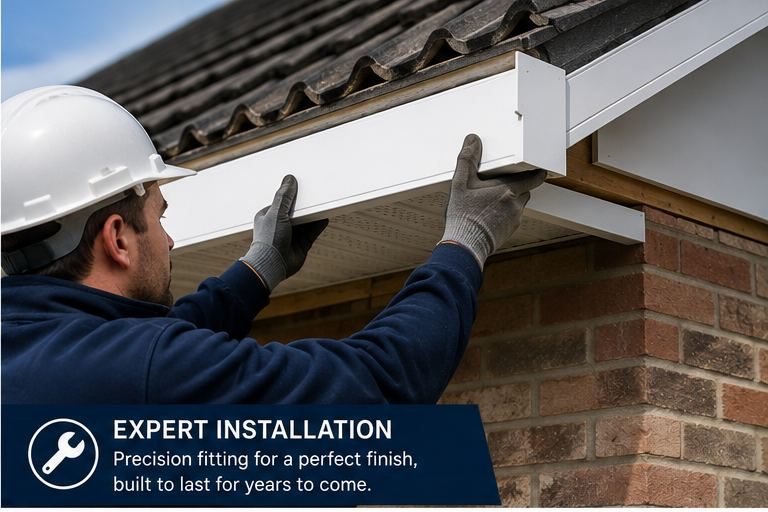
Replacement means removing the old fascia and gutters, checking the rafter ends and eaves, fitting new boards and soffits, adding vented soffits or vent strips so the roof space breathes, and refitting or replacing the gutters. UPVC is cleaned rather than painted and is very low maintenance. Finishes include white and darker or wood-effect options. Colour, board depth and soffit style are agreed with you before anything is ordered.
Access and planning
The work needs safe access, usually scaffold, and on streets with parked cars and narrow pavements we plan around it. Rear extensions with low roofs can be easier to reach but still need care. You get the scope in writing, including how the gutters and downpipes are dealt with at the same time. Photographs of the old boards and any hidden damage come with the written scope.
Frequently Asked Questions
Can I just paint over rotten wood?
Paint will not stop rot and can hide it. If the timber is soft, it needs cutting out or replacing. Painting only works on firm, dry wood that has been properly prepared and had the cause of the damp put right.
Is it worth replacing gutters at the same time?
Usually yes, because they have to come off anyway to fit the new fascia. Reusing old gutters risks leaks at the joints and sagging brackets. We tell you if the existing ones are fit to refit or should be renewed.
Does a new fascia change how the house looks?
Slightly. White is the common choice, and darker or wood-effect finishes are available. The board profile and soffit depth can differ from the old timber, so we talk through the look with you beforehand.
Talk to our team about UPVC fascias and soffits in Eastville
Every roof is different — the fastest way to get an accurate answer is a quick chat with our team.