
Fitting a roof window means cutting into the roof structure and rebuilding around it. This is the sequence for a loft conversion, from planning to the final lining.
A loft conversion in Barton Hill usually means giving the Victorian or later roof a way to let in light, and roof windows do that well. Fitting one is a structural and weatherproofing job rather than just a window swap. VELUX and similar roof windows are common choices, and the work follows a clear sequence. Here is what happens and what we check.
Planning the openings
We start with the room layout and where light is wanted, then check the roof structure above. The window must match the pitch and be placed clear of rafters, chimneys and other obstructions. The size, number and position of windows all affect how the room feels. The work may need planning or Building Regulations checks — we advise before work starts.
Opening up the roof
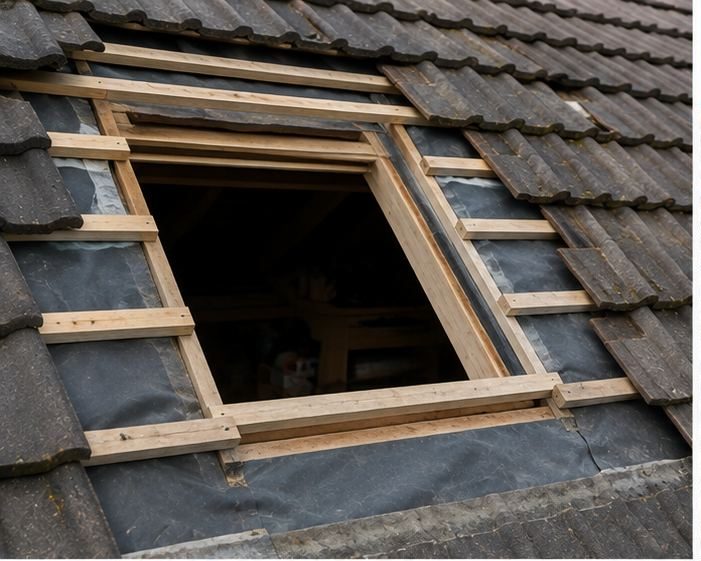
Tiles or slates are lifted around the opening and set aside for reuse. Battens and felt are cut back carefully, so as little of the roof is exposed as possible, and the area is covered if the weather turns. Tiles or slates are lifted around the opening and set aside for reuse. Battens and felt are cut back carefully, so as little of the roof is exposed as possible, and the area is sheeted over if the weather turns while it is open.
Rafters sometimes need trimming and doubling up, so the load is carried properly around the opening. This is done with new timbers to suit the span, not by guesswork. Rafters sometimes need trimming and doubling up, so the load is carried properly around the opening. This is done with new timbers to suit the span, not by guesswork, and we check the sizes before cutting anything.
Fitting the window and flashing
The window is fixed into the frame and matched to a flashing kit made for the roof covering, whether tile, slate or something else. The flashing is what keeps water out, so its fit around the sides and top matters more than the glass. Tiles are cut back in around the kit and the covering is made good.
- Window matched to the roof covering and pitch
- Flashing kit fitted correctly at all sides
- Felt and battens lapped to shed water
- Surrounding tiles refitted tight to the flashing
Lining, insulation and vapour control
Inside, the opening is lined and insulated, with a vapour control layer to limit condensation and a neat splay finish. Without this, moisture can gather around the frame and cause damp, mould or staining. We check the insulation meets the thermal needs of a habitable room before the plasterboard goes on.
Finishing and handover
We check the window opens and closes smoothly, test the sealing, and clear up. If you are converting an old loft, we also look at the condition of the roof around the openings, as weakness elsewhere can spoil the finished room. You get a clear explanation of how to care for the windows afterwards.
Frequently Asked Questions
Do I need a new roof for roof windows?
Not usually. We fit windows into the existing roof if it is sound. If the covering around the opening is tired, we may suggest repairing or replacing that section so the flashing sits on good material.
Will rafters have to be cut?
Often, yes. Rafters are trimmed to make room for the opening and doubled up around it to carry the load. We check the structure first and explain what is needed before any cutting starts.
How do you prevent leaks around the window?
Using the correct flashing kit for the roof covering, fitting it carefully and lapping the felt properly. Most leaks come from flashing or sealing faults, not the glass, so those details get the most attention.
Talk to our team about VELUX and roof window installation in Barton Hill
Every roof is different — the fastest way to get an accurate answer is a quick chat with our team.