
When a VELUX or similar roof window drips, the glass is seldom the culprit. Flashing, sealing, condensation and the surrounding roof are the usual suspects.
Roof windows are common in Kingswood's converted lofts and extended homes, and a drip beside one is a familiar complaint. It is easy to blame the window itself, yet the glass is rarely at fault. VELUX and similar roof windows leak mostly because of what surrounds them. Finding which of four causes applies decides what the fix is.
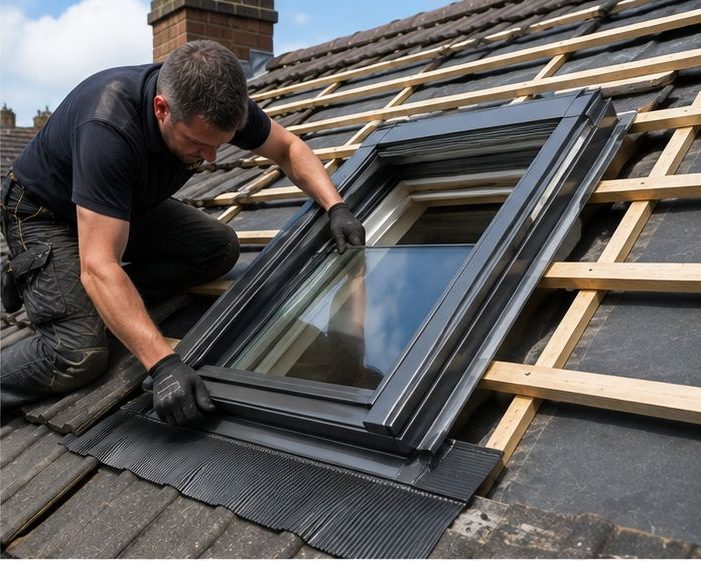
The flashing kit
Every roof window needs a flashing kit matched to the roof covering, whether tile or slate. If the kit is the wrong type, badly fitted, bent or corroded, water gets past it, particularly at the lower corners and sides. This is the commonest cause, and the repair is to refit or replace the flashing properly. A kit meant for a different tile type is a common mistake on older fittings.
Sealing and the roof covering around it
Seals around the frame can harden, shrink or split. The tiles or slates around the window can also be cracked or out of place, giving water a route in beside the flashing. So we examine the covering for several rows around the window rather than looking at the frame alone. Wasp or bird damage to sealing, or years of sun, can also be a factor.
- Staining at the lower corners of the lining
- Drips running down the side of the frame
- Cracked or slipped tiles close to the window
- Hardened or split sealant around the frame
Condensation that looks like a leak
Warm, damp air from a loft room condenses on a cold surface and runs down the glass or frame, which looks just like a leak. It often points to poor lining, insulation or ventilation around the opening, or a vapour control layer that is missing or torn. The fix is to improve those, not to reseal the window. Opening the window to air the room on cold mornings helps condensation.
Misting and failed units
If the glass has moisture trapped between the panes, the sealed unit has failed. This is not a leak from the roof, but it does mean the unit, or the whole window, needs replacing. It is common on older windows, and we can tell the difference from the inside. Replacement units are matched to the existing frame where possible.
What we do first
We check the loft room, the lining and the flashing from inside, then the surrounding covering from the ground and up close when we do the repair. We report what we found, which of the causes it is and what it will take to put right. Please do not climb up to check yourself. If the cause is more than one thing, we explain the order in which to deal with it.
Frequently Asked Questions
Can I tell if it is condensation or a leak?
A leak usually appears after rain and follows a path from the outside. Condensation tends to appear in cold weather, especially mornings, and is worse in rooms with steam. We check both when we visit. Rain-only drips point to a leak; mornings point to condensation. Both are worth reporting.
Will resealing the window cure it?
Only if the sealing was the cause. If the flashing, covering or condensation is to blame, sealant alone will not hold, so we find the true cause before suggesting a repair. Repair first, replacement only if the evidence supports it. Honest answers come before any work begins.
Does a leaking window always need replacing?
No. Many are put right by renewing the flashing or the covering around them. Replacement is for failed sealed units or damaged frames, and we say which applies after inspecting. We explain which applies.
Talk to our team about VELUX and roof window installation in Kingswood
Every roof is different — the fastest way to get an accurate answer is a quick chat with our team.