Gable edges on Bishopston's tall houses
Tall terraces and bay-fronted houses put the roof edge high up, where wind is stronger than at street level. Failed mortar on a gable up there can go unseen for years, and the roof underneath takes more weather than it should. Tall frontages, bays and dormers give these houses more junctions than a plain roof, and each one needs looking at.
The usual first sign is bits of mortar on a path, a patio or a car below the gable. It is worth a proper look when that happens, before gaps at the edge let wind underneath the tiles along the verge. Many lofts have been converted over the years, so the roof is often part original and part later alterations.
Many roofs here have been altered with dormers and loft conversions, so the tile coverings along the edge can differ. Whether a dry verge fits depends on the tile profile, which we check on site before recommending it. Family homes here are lived in right up to the top floor, so a roof fault tends to show quickly inside.
Dry verge work in Bishopston
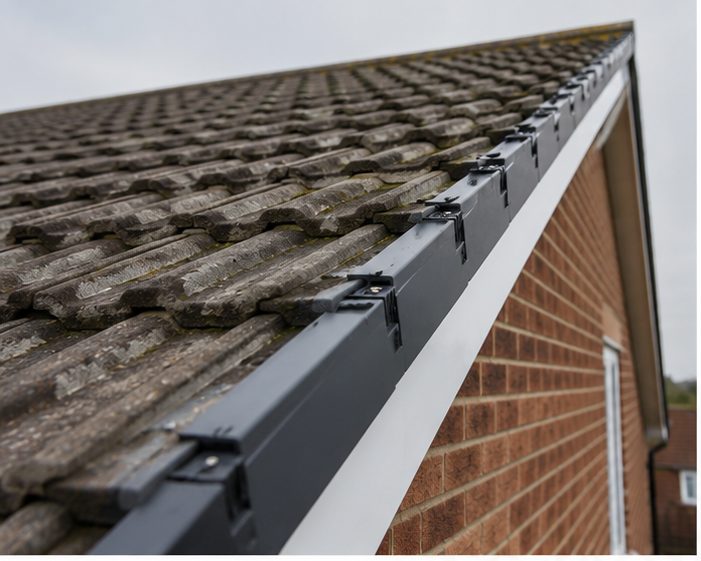
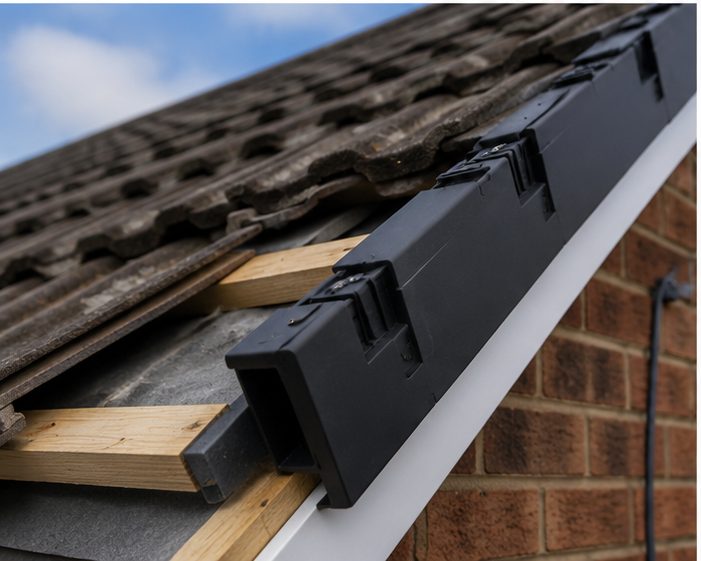
- Dry verge on re-roofs. A new roof gets fixed verge units from the start, so the gable edge never relies on mortar.
- Repairing failed mortar verges. On a roof that is otherwise sound, crumbling bedding is removed and a dry verge system is fitted along the edge.
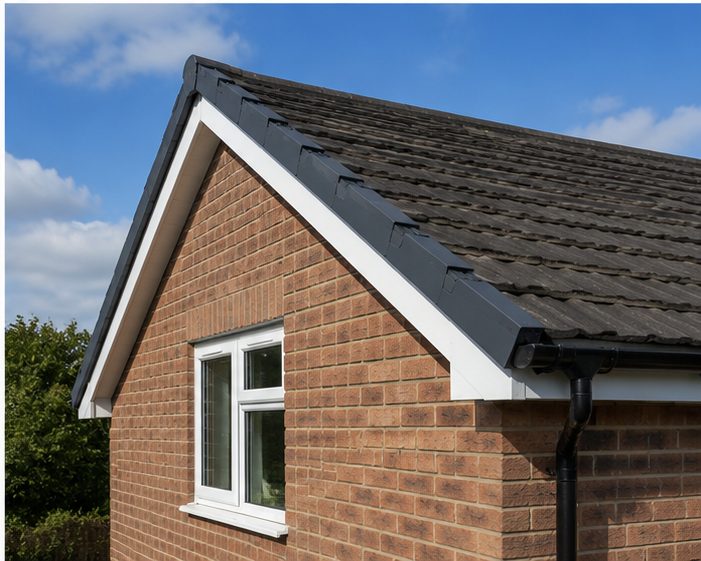
- Gable-end verges on terraces. Exposed end-of-terrace and side gables are fitted with units that resist lifting from strong wind at height.
- Dormer side verges. Where a dormer or loft extension has a pitched roof edge, we finish it with matching dry verge pieces.
- Tile-end and cap fittings. Matching end and cap pieces give the edge a tidy finish that follows the line of the roof.
- Checking the wider roof. We look beyond the verge and tell you if the problem lies elsewhere, since dry verge does not cure a roof failing in other places.
How we fit dry verge on Bishopston roofs
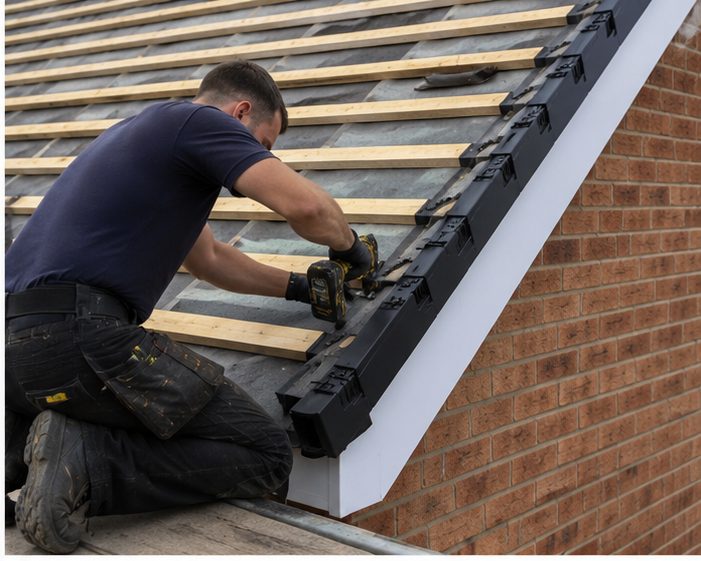
We begin with the tile profile and the state of the roof next to the edge. Because these gables are high, scaffold or a tower is normally arranged, and the work goes along the verge removing old mortar and fixing the new units to the tile maker's guidance. Height is the main practical question here, so we plan proper access before anything else.
If the covering beside the verge is tired, we explain that first, as a dry verge cannot rescue a failing roof. Some edge work, particularly with loft conversions, may need planning or Building Regulations checks — we advise before work starts. We keep disruption to the household and the street as small as we can.