Flat Roofs on Henleaze Semis and Bungalows
A lot of Henleaze houses have grown over time. Edwardian and inter-war semis carry rear extensions and side garages, while bungalows and larger detached houses often have flat porch roofs, bay tops and the flat sections of loft dormers. Keeping outlets clear is the simplest protection a flat roof can have, though we would never ask you to climb up to do it.
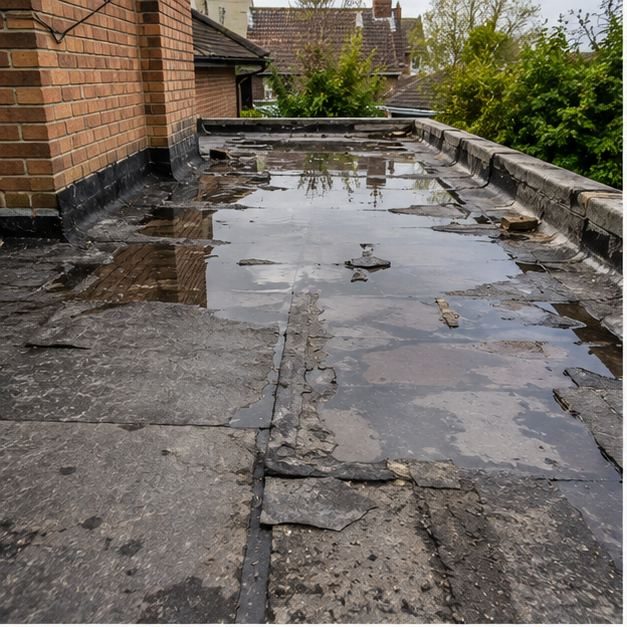
Trees matter here more than most places. Leaves and seed fall settle on flat roofs and block outlets, and the standing water that follows is what splits seams and stains the ceiling below. A flat roof under branches needs its outlets watching. Checking them is part of any dormer repair we carry out.
Dormers added in loft conversions have small flat roofs with tight edges and upstands. They are awkward to reach and easy to forget, so a slow leak can run for a long time before it shows in a finished bedroom. The same goes for garage and extension roofs that sit under branches.
Flat Roofing Work We Do Around Henleaze
- Repairs to splits and blisters. Cutting out and sealing damaged patches in the covering where the roof is otherwise sound, so water stops entering without a full re-cover.
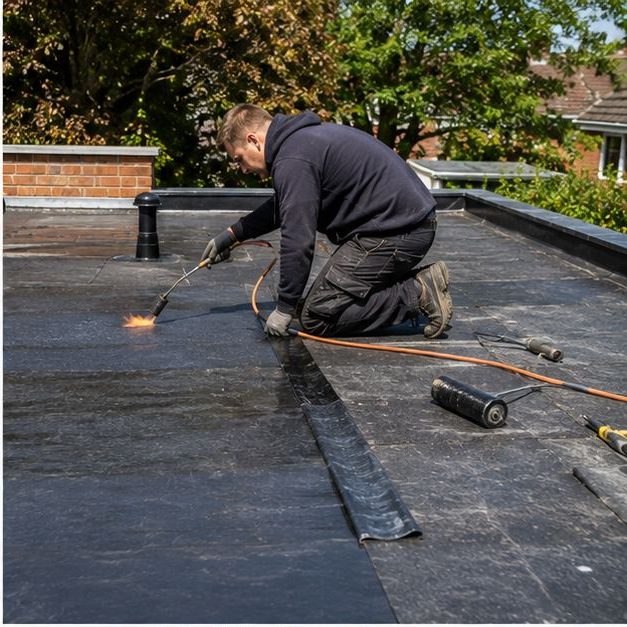
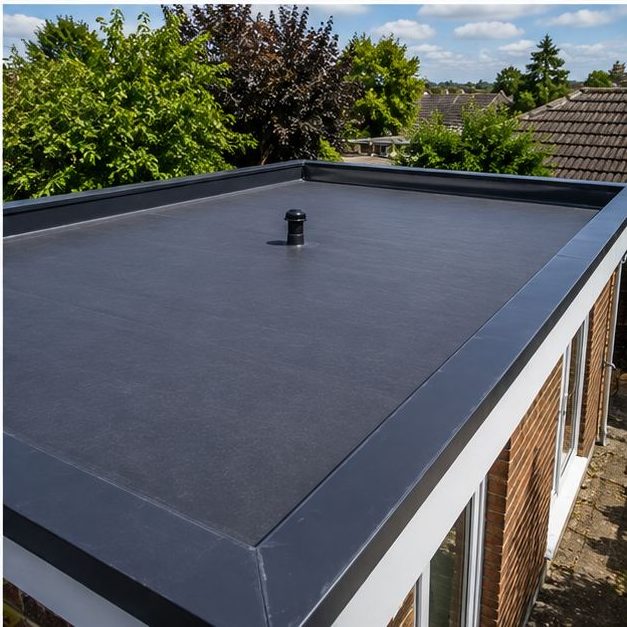
- Full flat roof replacement. Stripping a worn-out covering and laying a new system, in single-ply rubber, fibreglass or felt, whichever suits the roof and the budget.
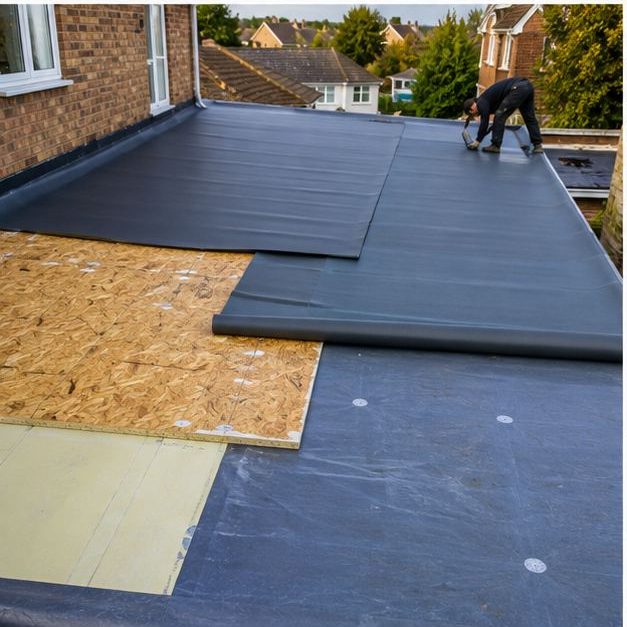
- Rotten deck replacement. Cutting out soft boards found under the covering and fitting sound new decking before the new waterproof layer goes down.
- Dormer and bay-top roofs. Reworking the small flat roofs on dormers, bays and porches, including the upstands and trims where they meet pitched slopes.
- Extension and garage roofs. Re-covering larger flat roofs over rear extensions and garages, with outlets and edge trims renewed where they have failed.
- Insulation and falls. Adding insulation and correcting the fall so water runs to the outlet, rather than lying on the surface after rain.
How We Approach a Flat Roof in Henleaze
We look at the underside first where we can, checking ceilings and the deck from inside for dark patches and soft spots. Then we inspect the surface, outlets, edges and upstands to find the real route the water is taking. That tells us whether we are dealing with one fault or several.
You get a straight account of the options. Repair where the roof is sound enough, replacement where it is not, and a short explanation of the materials so you can choose. Scaffold or access is planned before we start. Nothing is started until you have agreed it. Scaffold or access is only arranged once you are happy with the plan.