What goes wrong on Easton terraces
On a dense Victorian terrace, the main roof is only part of the story. Bay window tops, rear lean-tos and small flat sections all have their own junctions with the brickwork, and those are where leaks often start. We check them as part of any repair, not as an afterthought. Careful checking of each of those small roofs saves a second call-out later.
Terraces share party walls, so the lead flashings and pointing along them have to cope with weather from both sides. When that lead lifts or cracks, rain tracks down the wall into the room beneath. Neat repairs there can stop damp spreading well beyond the roof. A tidy repair along a party wall can stop damp spreading into the house next door as well.
Easton's streets are busy and often tight for parking and deliveries, so a repair here needs planning. We think about how materials will reach the roof and how the road and neighbours will be affected, and we keep the working area tidy so it does not cause trouble. Planning ahead keeps the repair quick and keeps the street clear.
Roof repair jobs we handle in Easton
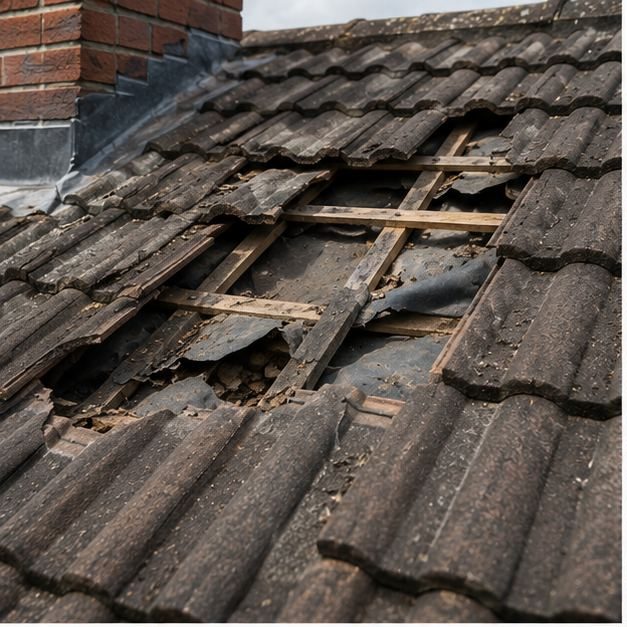
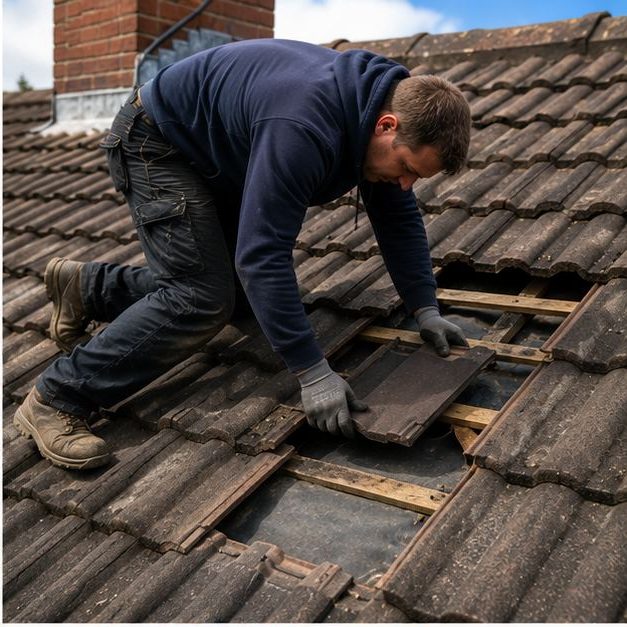
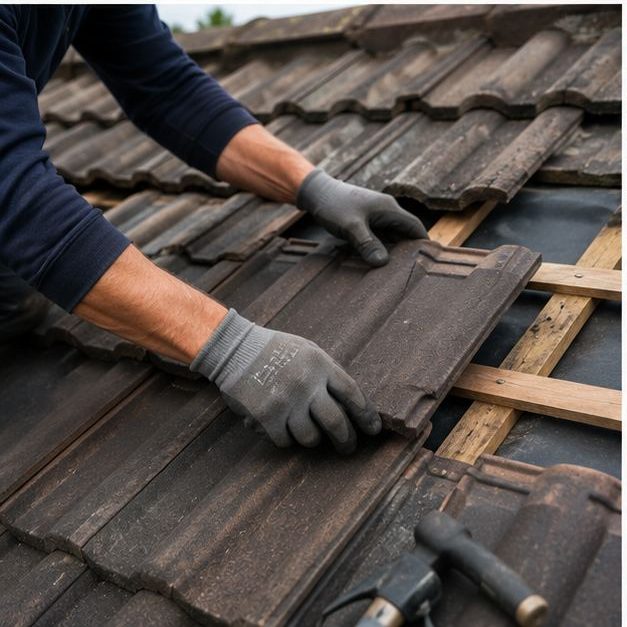
- Slipped and cracked tiles. Replacing tiles that have slid, split or gone missing on terrace roofs, and refixing the ones around them so the slope is secure.
- Broken and loose slates. Replacing slates that have cracked or worked loose, taking care not to disturb the sound ones on older terrace roofs.
- Bay top and lean-to repairs. Repairing the small roof sections over bay windows and rear lean-tos, including their lead, valleys and junctions with the walls.
- Party wall lead and flashings. Renewing lifted or cracked lead along shared walls, which is one of the commonest sources of leaks on terrace roofs.
- Ridge and hip re-bedding. Taking loose ridge and hip tiles off and bedding them back securely so the top of the roof closes up against weather.
- Verge and gutter-edge repairs. Putting right broken mortar at the gable edge and worn details at the gutter line so wind and rain stay out.
How a roof repair works on Easton's streets
We begin with what you have seen inside, such as stains, drips and damp, then look at the roof from outside and from the loft where we can. In a tight street, we work out early how a tower or scaffold can go up and where materials can safely be stored.
After that you get a plain report: what is wrong, what is urgent, and whether repair is the right answer or the roof is closer to replacement. We keep noise and mess down for the neighbours who share your walls. Some work may need planning or Building Regulations checks, and we advise before work starts.