Why flat roofs fail on Easton terraces
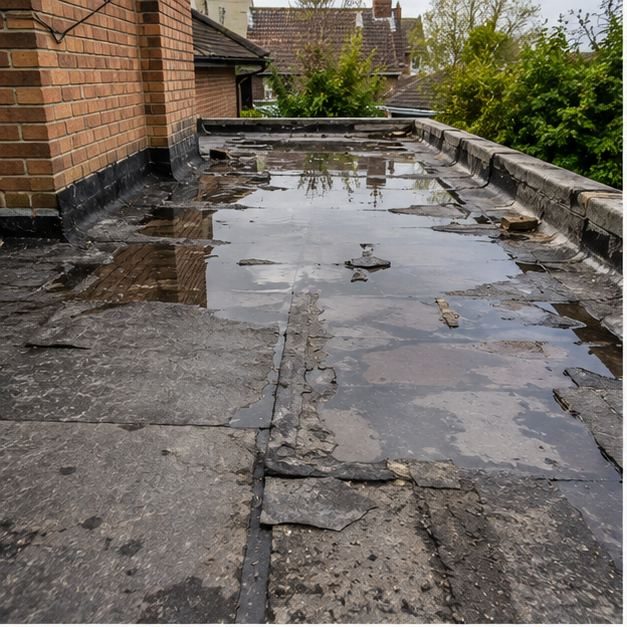
A flat roof on a terrace nearly always butts up to a tall brick wall. Where the covering meets that wall, the upstand and flashing have to hold up against rain running down the brickwork, and over time they lift, crack and let water in behind the roof. We rebuild that junction properly so the repair lasts.
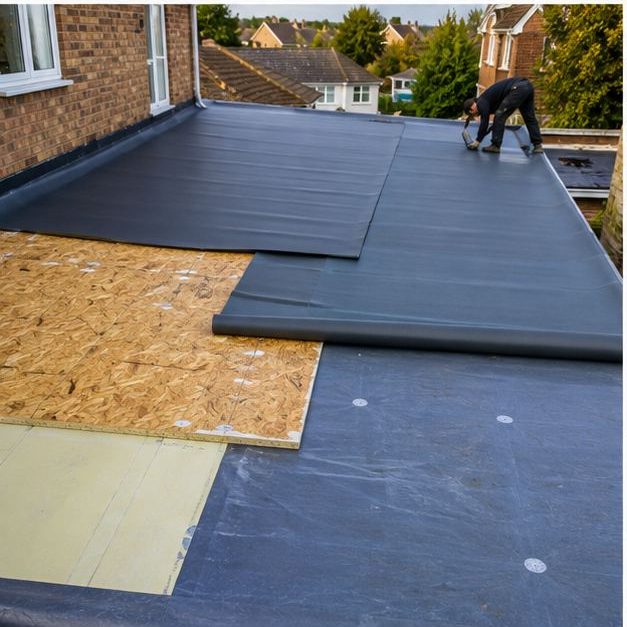
Rear lean-tos in Easton were often added piecemeal, and their roofs may have little fall and a thin deck. Water lies and finds its way through, then boards below start to soften. Rotten timber is a common find once a worn covering comes off. Fixing the deck and the falls matters as much as the covering.
Bay tops are another small flat roof that gets forgotten. They are awkward to reach, and their edges and corners are easy to miss. Because they sit over the front room, a leak shows quickly, so we check the whole bay roof rather than just the visible patch. We always tell you what we find up there.
Flat roofing work in Easton
- Repairing splits, blisters and joints. Cutting out and sealing failed areas on a covering that is otherwise sound enough to deserve a repair.
- Rear extension and lean-to roofs. Renewing flat or low-pitched coverings over rear additions, including the deck, falls and junctions with the main house wall.
- Bay top roof coverings. Re-covering the small flat roofs over bay windows, with attention to their edges, corners and the lead around the bay.
- Porch and outbuilding roofs. Repairing or replacing coverings on small porch, garage and outbuilding roofs that have worn out or started leaking.
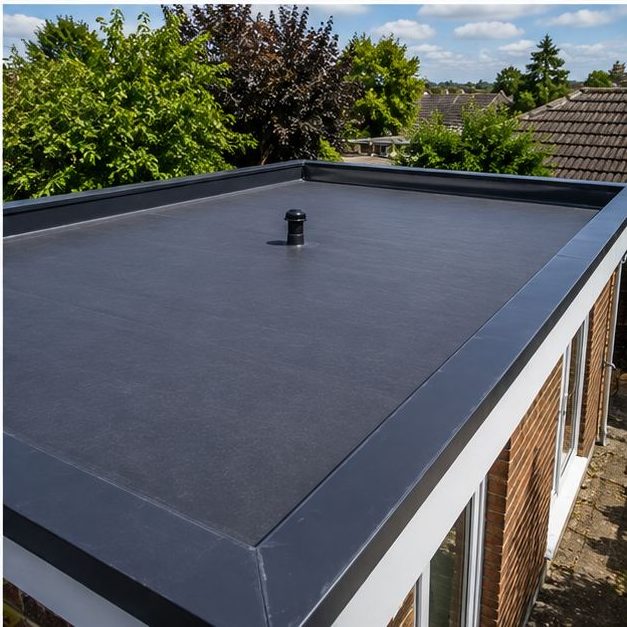
- Upstands, abutments and trims. Rebuilding the junction between roof and wall and fitting edge trims, so water runs off the roof and not behind it.
- Rotten deck and outlet work. Replacing soft boards found under the covering and clearing or renewing outlets so rainwater leaves the roof.
How we plan flat roof work in Easton
Before anything else, we look at the roof and the ceiling below, because the underside tells us how far water has travelled. We check the falls, edges, outlets and wall junctions, and press the deck where we can to find out whether it is sound. We will not recommend a covering until we have seen the roof properly.
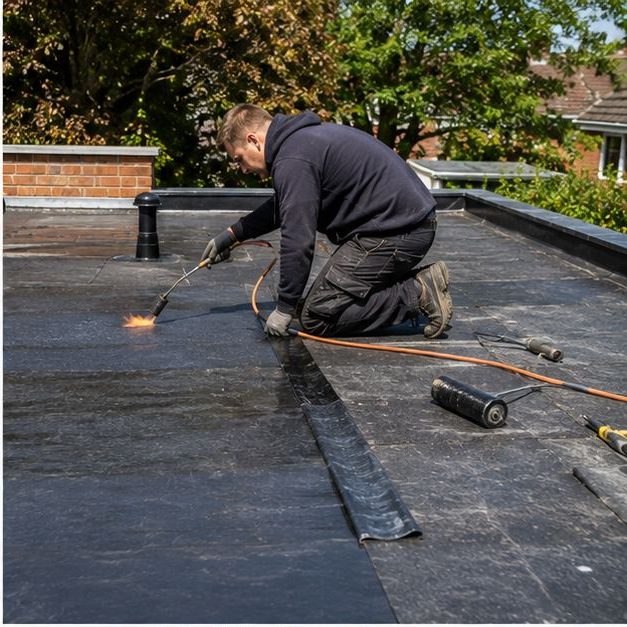
On a busy street, access shapes the job, so we decide early how materials will get to a rear roof and how the area will be protected. We discuss rubber, fibreglass and felt systems in plain terms. Some work may need planning or Building Regulations checks, and we advise before work starts.