Dry verges on concrete-tiled Lawrence Weston roofs
These estates are open to wind from the Severn side, and a gable edge catches wind from underneath and from the side at once. Mortar bedding takes constant pressure, cracks along the line where it meets the tile and eventually drops out in lumps, leaving tile ends loose and the roof edge open. Once that bond goes, the tile ends start to lift and the gap lets rain and draughts into the loft.
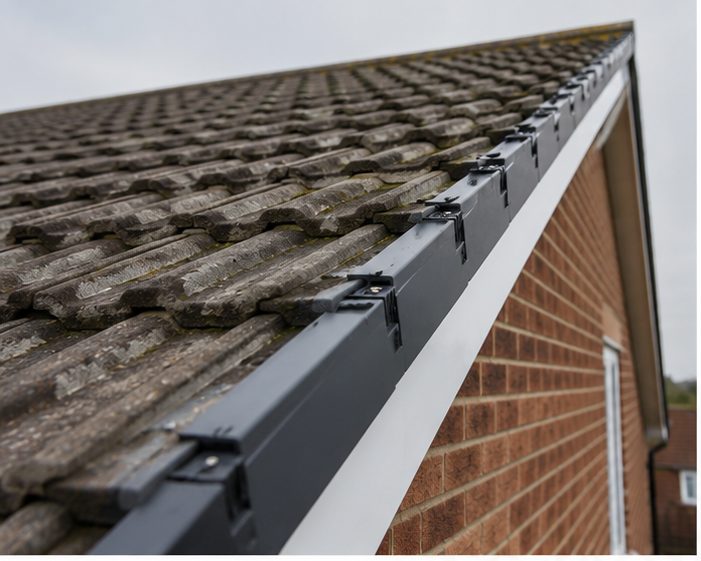
Concrete tiles are common here, and verge systems are designed around tile profile, so we check compatibility on site rather than assuming. Most post-war tile types suit a dry verge, but a quick look at the tile edge settles it before we order anything. Most of the tiles we see on this kind of housing suit a dry verge, but the edge detail still gets checked first.
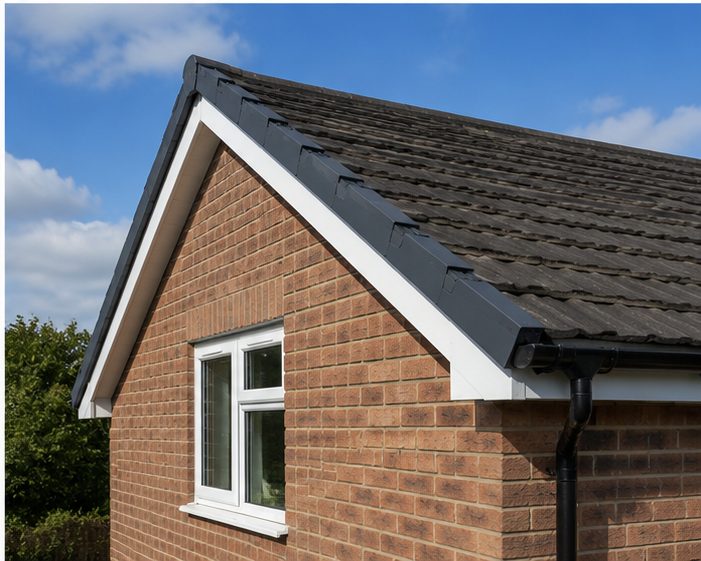
With so many gables in a row, it is common for one house to have repaired verges and the neighbour not. Dry verge units give a clean, even line, and keep weather, birds and insects out of the roof edge, which crumbling mortar tends to let in. That uneven finish is easy to spot from the road, and it is worth tidying up while access is arranged.
Dry verge work in Lawrence Weston
- Dry verge on a re-roof. Fixing verge units as part of a full re-tile, so the gable edge is finished correctly from the start.
- Replacing failed mortar verges. Old cracked mortar removed and replaced with fixed verge units on a roof that is otherwise in sound condition.
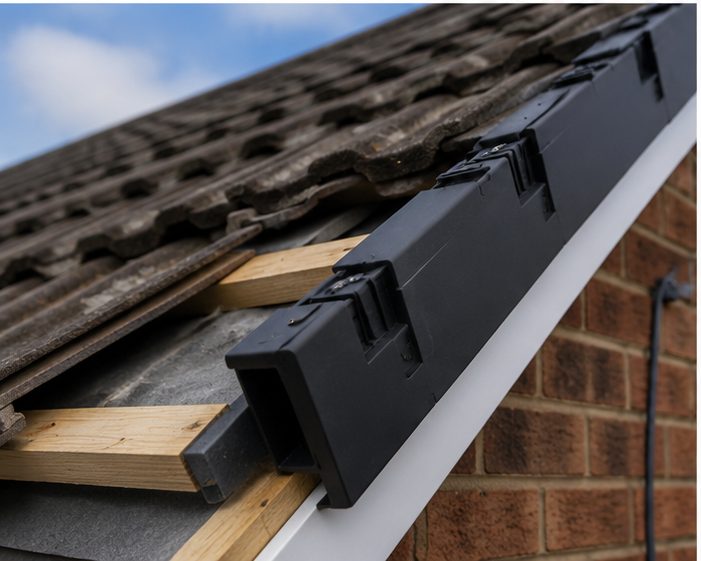
- Verge tile-end and cap pieces. Matching end pieces and cap sections fitted so the verge reads as one neat line along the gable.
- Garage verge repairs. Gable edges on garages repaired or converted, where mortar has gone and the roof edge is open to rain and birds.
- Storm-loosened verge checks. Looking over gable edges after high winds and re-fixing anything that has shifted before water gets in.
- Compatibility survey on site. Checking the tile profile and verge edge before any units are ordered, so what we fit actually suits your roof.
How we fit dry verge systems in Lawrence Weston
We begin by looking at what is failing. If mortar is falling but the tiles, felt and battens are sound, a dry verge is a straightforward fix. If the roof is failing elsewhere, we say so, because a new verge on a tired roof is only part of the answer. We also check the batten ends under the edge, since damp there can hide behind the old mortar for a long time.
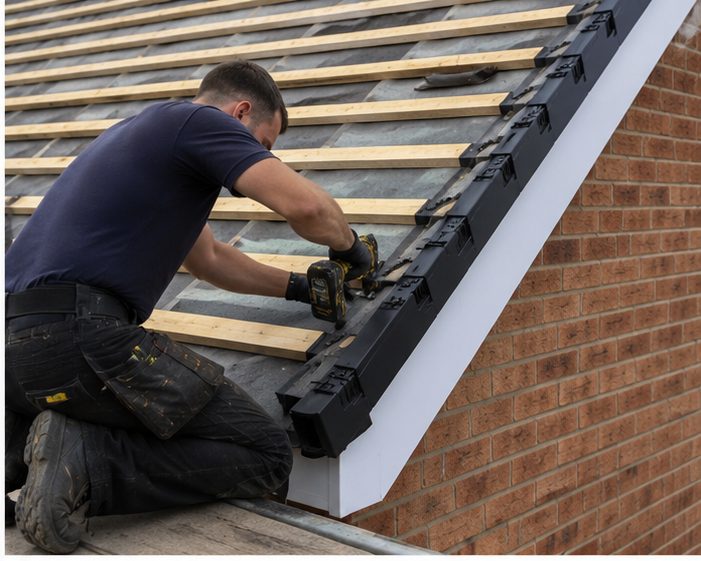
The units are fixed to the tile maker's guidance, and access is arranged for the gable. We clear the old mortar, check the batten ends and fit the system dry. Where the work goes beyond a repair, it may need planning or Building Regulations checks, and we advise before work starts. You get a plain explanation of what each part does, so nothing about the finished edge is left unclear.