New Fascias and Soffits for Patchway Semis and Estates — Brunel Roofing Bristol

New Fascias and Soffits for Patchway Semis and Estates

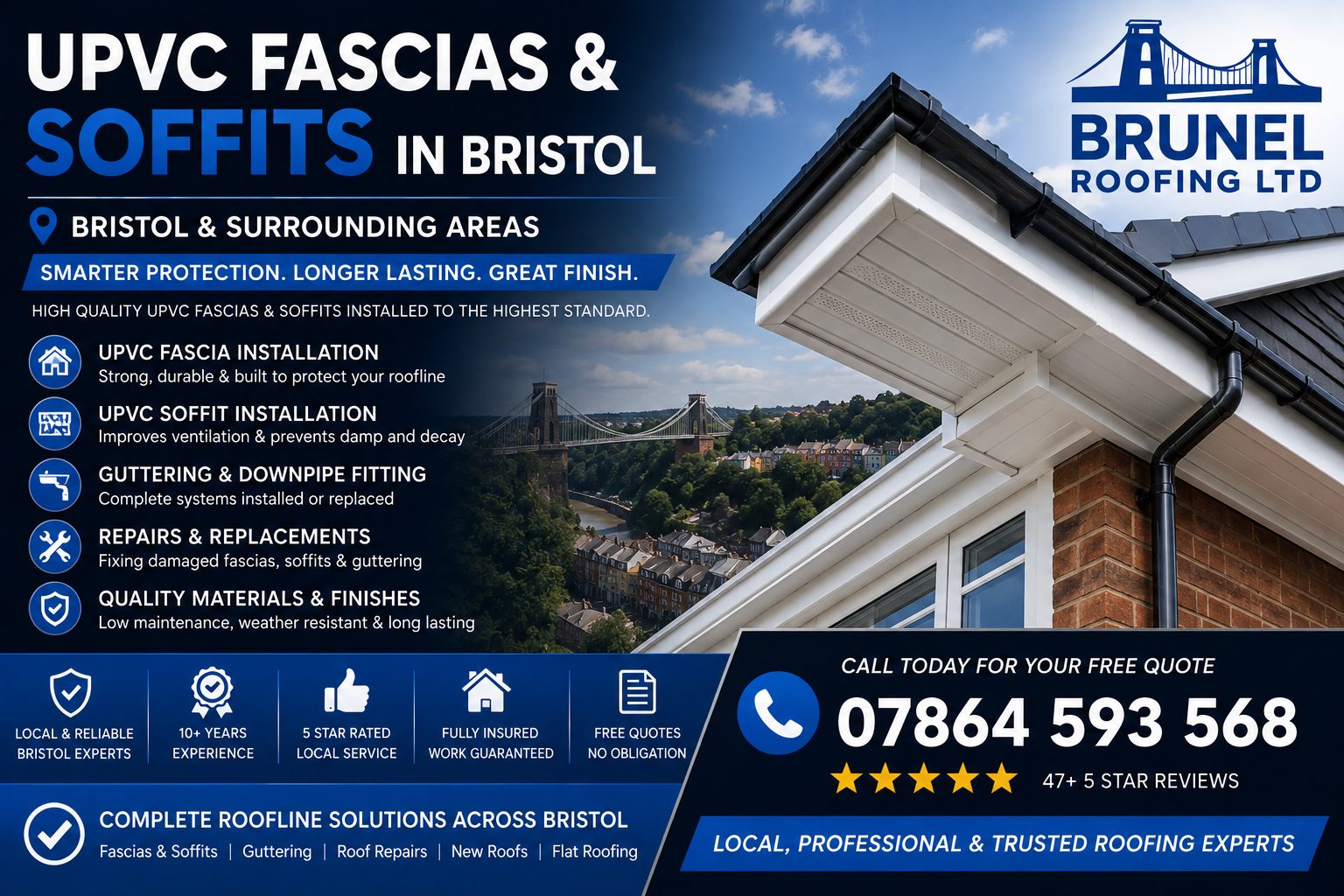
UPVC fascias, soffits and bargeboards for Patchway houses, replacing tired timber boards with low maintenance finishes and checking the rafter ends behind them.

✓ Fully Insured
✓ 15-Year Guarantee
✓ 24-Hour Emergency Call-Out
✓ Free Quotes & Advice
★ Fully Insured & 15-Year Guarantee
★ 24-Hour Emergency Call-Out
★ Local Bristol Roofers
★ Free Quotes & Advice
Roofing Services · Patchway

UPVC Fascias & Soffits for Patchway Properties

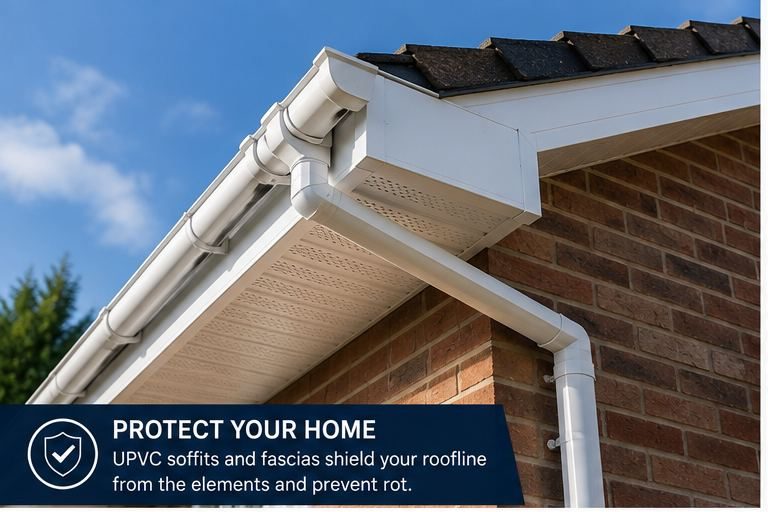
The fascia is the board at the rafter ends that carries your gutter, and the soffit is the board that closes the underside of the eaves. On a hipped roof the boards run round all four sides, so the length of timber to look after is considerable. That is a lot of boards to keep painted and sound.

Timber boards rot wherever water sits, usually at joints and under leaking gutters. UPVC is cleaned rather than painted and is very low maintenance, which is why many Patchway owners choose it when the old boards have reached the end of the road. The new boards are also fitted square and tight, which keeps birds and insects out of the eaves.

UPVC Fascias & Soffits in Patchway by Brunel Roofing BristolUPVC Fascias & Soffits in Patchway by Brunel Roofing BristolUPVC Fascias & Soffits in Patchway by Brunel Roofing BristolUPVC Fascias & Soffits in Patchway by Brunel Roofing Bristol

Talk to our team about UPVC fascias and soffits in Patchway.

Fascias and soffits on Patchway estate houses

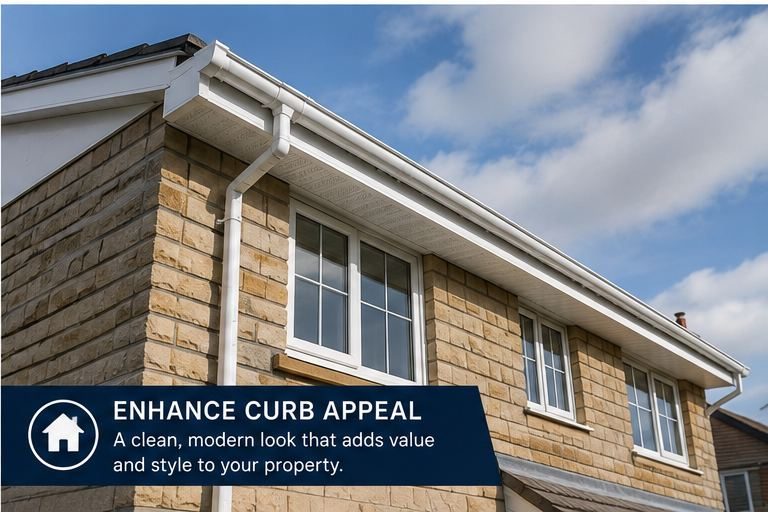
Hipped semis are common across Patchway's inter-war and post-war estates, so the eaves go right round the building and the gutters turn each corner. A leaking corner joint in a gutter can soak a fascia board for years before the paint gives way. By the time the paint flakes, the timber behind it may already be soft.

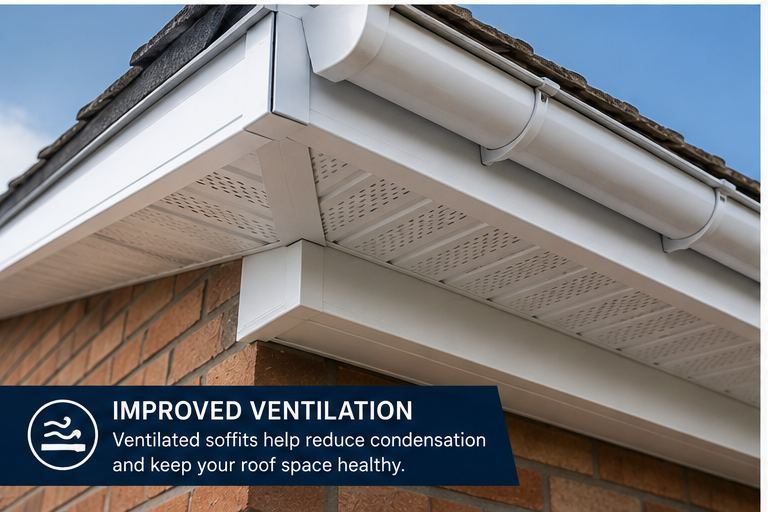
Many of the older houses still have original timber soffits that were never designed with modern ventilation in mind. When we replace them, we fit vented soffits or vent strips so the roof space can breathe and condensation in the loft is reduced. Fresh air in the roof space also helps protect the timbers over the long run.

On older homes we check what the existing soffit boards are made of before we disturb them, and we handle them accordingly. Newer Patchway developments are simpler, usually plain boards that can be replaced quickly once scaffold is up. We find out first, then plan the work around what the boards turn out to be.

Fascia and soffit work in Patchway

  • Full fascia and soffit replacement. Old boards and gutters are taken off, the rafter ends checked, and new UPVC fascias and soffits fitted all the way round the house.
  • Bargeboards at gable ends. Where a roof has a gable, we replace the bargeboard along the gable edge so the roof edge is finished and protected.
  • Vented soffits. Soffits with built-in ventilation, or vent strips fitted into the board, help the loft breathe and keep condensation down.
  • Gutter replacement alongside. New gutters are fitted at the same time, so the boards are not soaked again by an old gutter that leaks at the joints.
  • Capping over existing boards. Where the timber behind is sound, new UPVC can be fitted over the existing boards for a tidy finish without full removal.
  • Repairs and partial replacement. If only one side or a few boards have failed, we replace those and match the finish as closely as we can.

How we fit fascias and soffits in Patchway

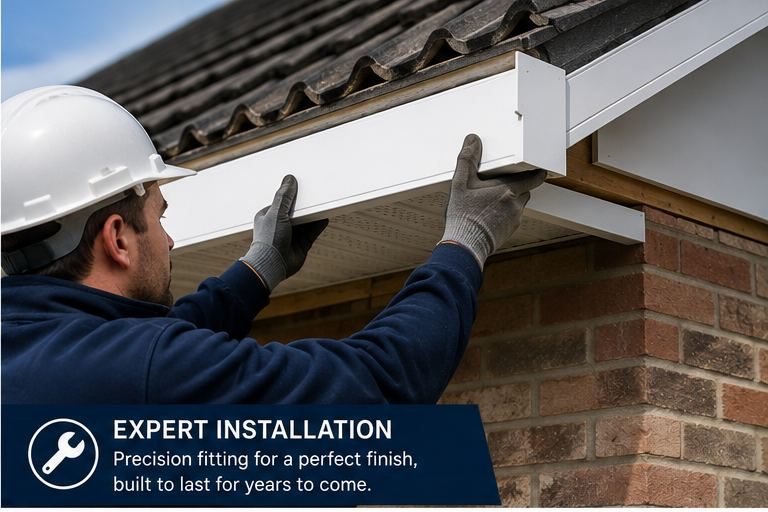
Scaffold or safe access is needed for this work, and the wide estate roads in Patchway generally make that straightforward. We look at the boards from below first, then the rafter ends and the eaves once the old boards are off. Most of the work is done from the scaffold in a day or two, depending on the size of the house. We keep the site tidy throughout.

We tell you what we find before fitting the new boards. Finishes include white and darker or wood-effect colours, and we talk through which suits the house. Gutters are refitted or replaced to suit, and the roof space is left ventilated. Nothing is left half finished. You will know exactly what is going up on the house.

FAQs

UPVC Fascias & Soffits in Patchway — Frequently Asked Questions

Do I need scaffold for new fascias?

For most houses, yes. Safe access along the whole eaves line is needed to take off the old boards and gutters and fit new ones, and we arrange it as part of the job. Scaffold is also what lets us check the rafter ends properly.

Is UPVC better than painted timber?

UPVC does not need painting and is very low maintenance, only an occasional clean. Timber can look good but rots where water sits. We explain both so you can decide. Neither is wrong, but UPVC suits most owners.

Why do you fit vented soffits?

Roof spaces need air movement to stay dry. Vented soffits or vent strips let air in at the eaves, which helps reduce condensation and protects the timbers inside the loft. It is a small detail with a real effect.

Can you fit over my old boards?

Sometimes. If the boards behind are sound and straight, capping over is possible. If there is rot, we remove them, since new boards on bad timber only hide the problem. It is a sound-timber question, not a cost one.

What colours are available?

White is the most common, but darker finishes and wood-effect options are available too. We can talk you through what suits a semi on a Patchway estate and the windows and doors. We bring samples if that helps.

Free Resource

UPVC Fascias & Soffits Advice for Patchway

Practical guides for homeowners in Patchway and across Bristol.

Browse the Full Advice Centre →
More in Patchway

Other Roofing Services in Patchway

🚨 24-Hour Emergency Call-Out

Emergency Roofing Repairs, Any Time of Day or Night

Storm damage, sudden leaks or a roof that's come apart in bad weather? Our emergency roofing team is on call 24 hours a day across Bristol — and every job we carry out, emergency or planned, is backed by our 15-year guarantee.

Get In Touch

Request Your Free Quote

Tell us what's happening with your roof and we'll get back to you — usually the same day.

Prefer to talk? Call 07864 593 568, 01179 110 458 or freephone 0800 4748 321.

📞