Where dry verges fit among Old Market's buildings
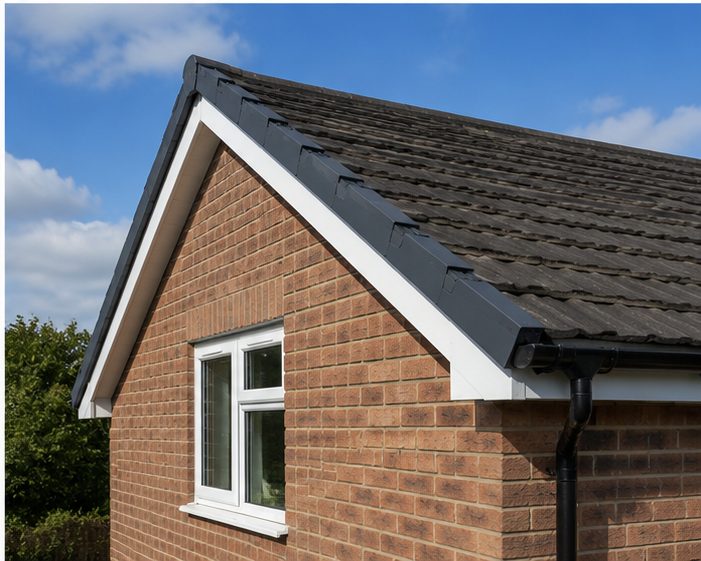
End-of-terrace houses are the obvious candidates in Old Market, along with any pitched roof that finishes at an exposed gable. Their verges face the open air on one side, so mortar there has taken weather for generations and often shows cracks, gaps or dark staining at the join. Those are the verges worth checking first.
The first thing most people notice is mortar fragments landing on the pavement, steps or yard below. In a busy central street, loose material falling from height is more than a nuisance, so we treat a failing verge as something to deal with in good time rather than leave to chance. A short look from the pavement is often enough to spot it.
Whether a dry system suits depends on the roof covering. Slate roofs are handled differently from tiled ones, and compatibility depends on the tile profile, so we look at the covering on site first. A dry verge is also no cure for a roof that is failing elsewhere, and we say so plainly.
Dry verge work we do in Old Market
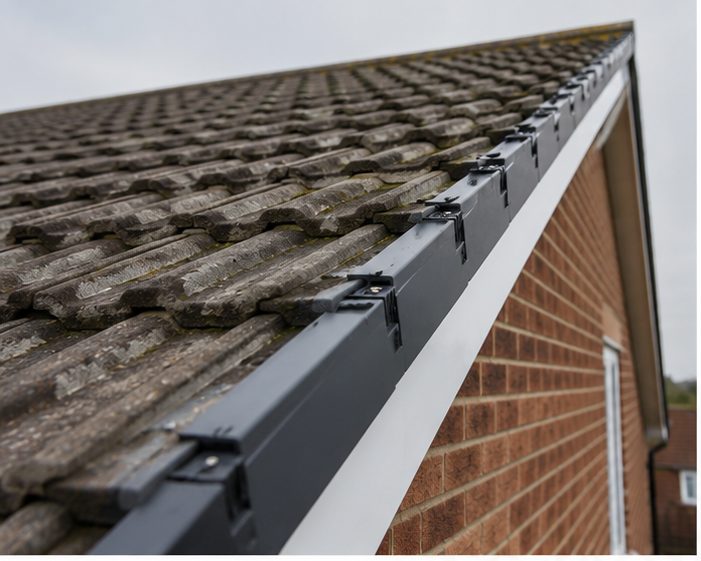
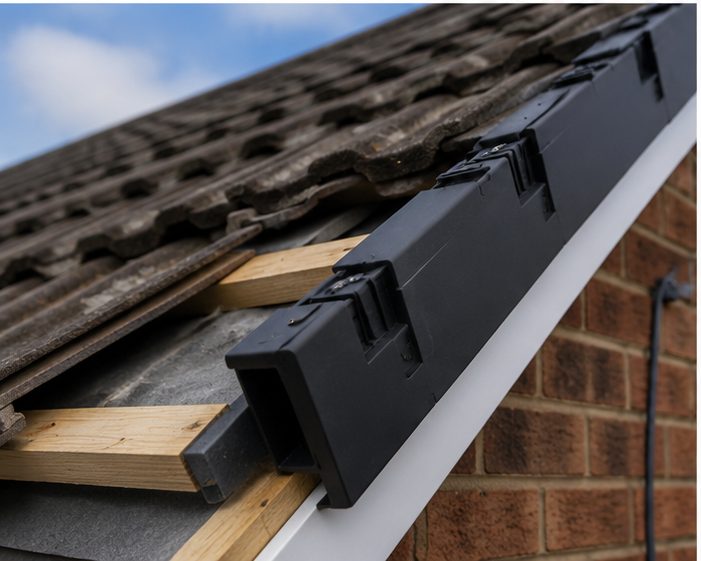
- Replacing failed verge mortar. Removing cracked and fallen mortar from a gable edge and fixing dry verge units in its place, with no wet bedding at all.
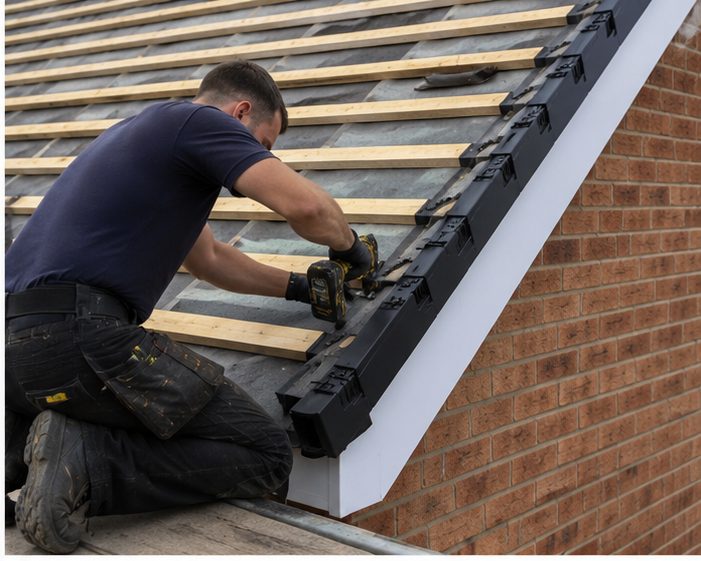
- Dry verge on a re-roof. Building a mechanically fixed verge into a new roof covering at a gable, so the edge is sound from the start.
- Repairs to loose gable edges. Re-fixing or replacing verge units that have lifted, and checking the tiles just inside the edge for movement or damage.
- Tile-end and cap pieces. Fitting matching end and cap pieces so the roof edge is closed off and tidy against the gable wall.
- Compatibility checks on site. Looking at the tile profile and condition of your roof to confirm that a dry system will fit before any units are ordered.
- Verge work with other roof repairs. Combining verge work with ridge, flashing or chimney repairs at the same gable, so access is set up only once.
How we carry out verge work in Old Market
We start from the street or yard, looking at the gable edge and at whatever mortar has fallen below. Then we inspect the verge up close from a safe set-up, check the tile profile and the state of the tiles, and decide whether a dry system will work.
Because access in the city is tight, we plan the scaffold or access equipment first and tell you how it will sit. Fixing follows the tile maker's guidance, and if the main roof needs attention too, we explain that before any work is agreed. That keeps the order of work sensible.